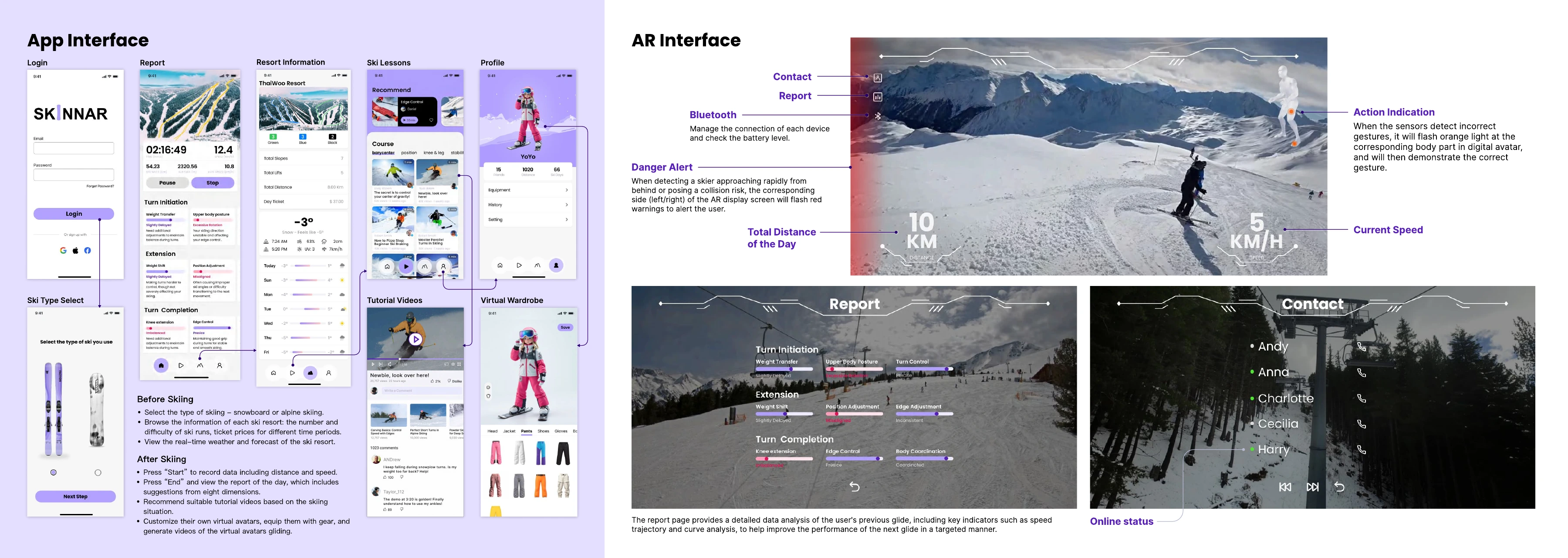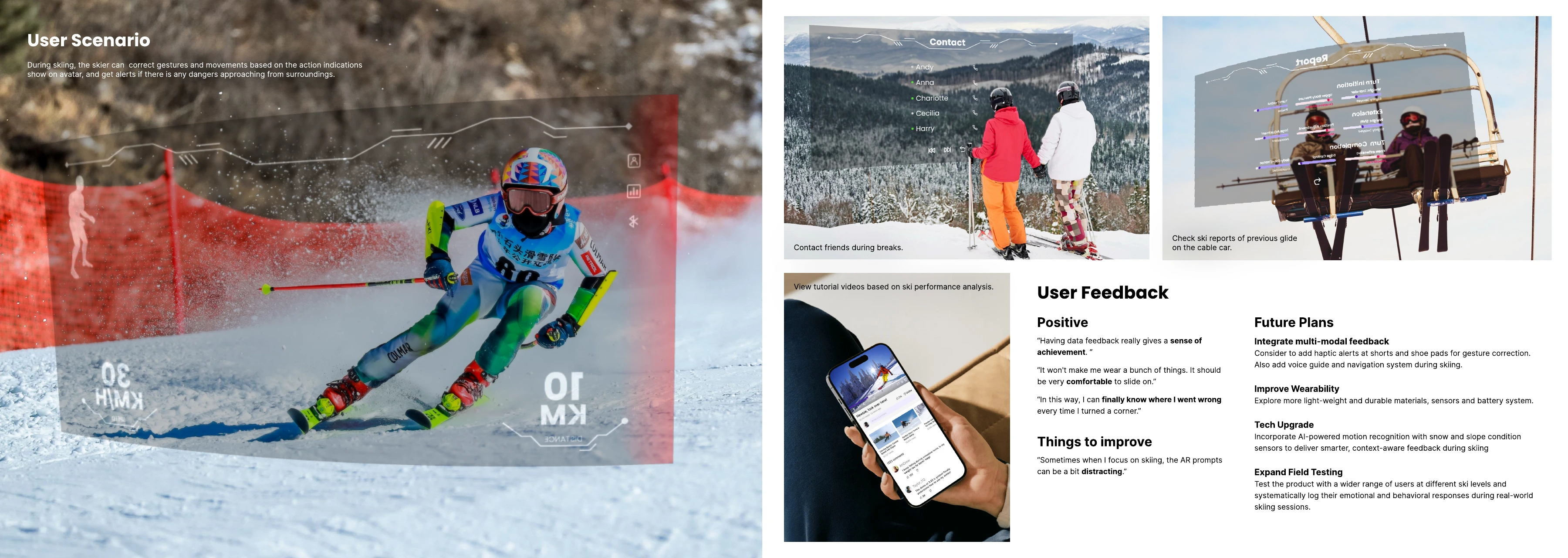
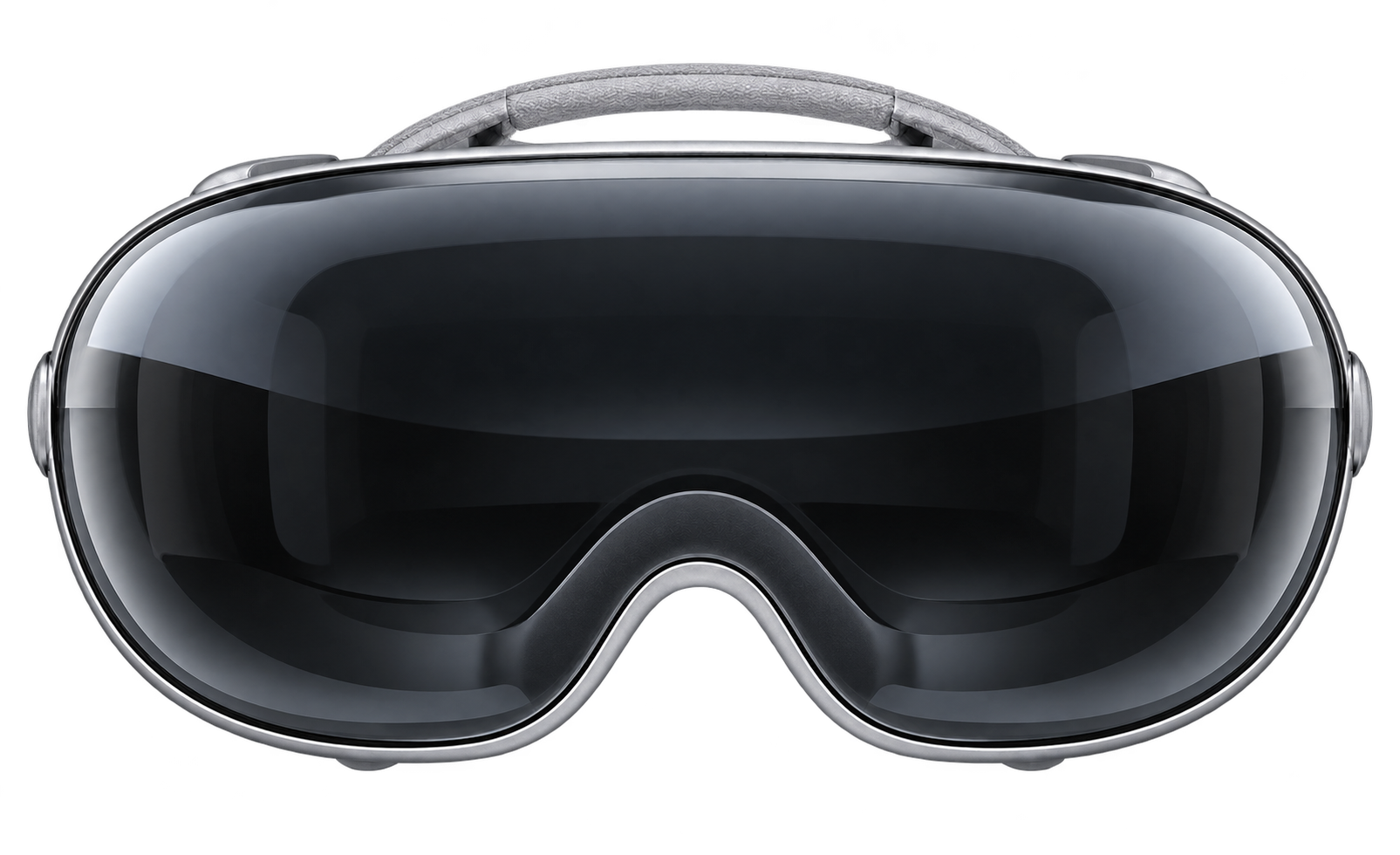



Stain Detection Glove
for the blind
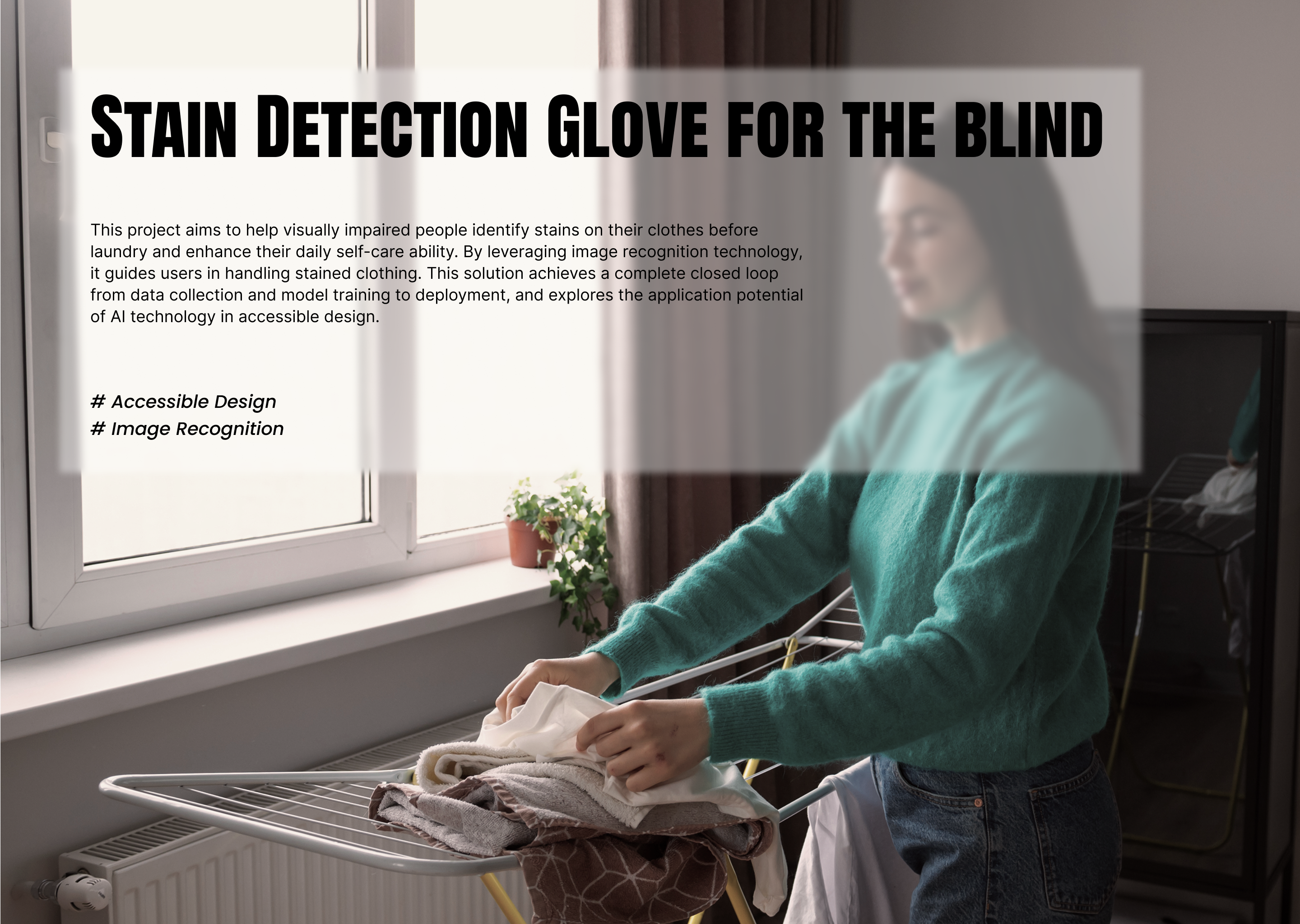
User research
Stains and daily independence
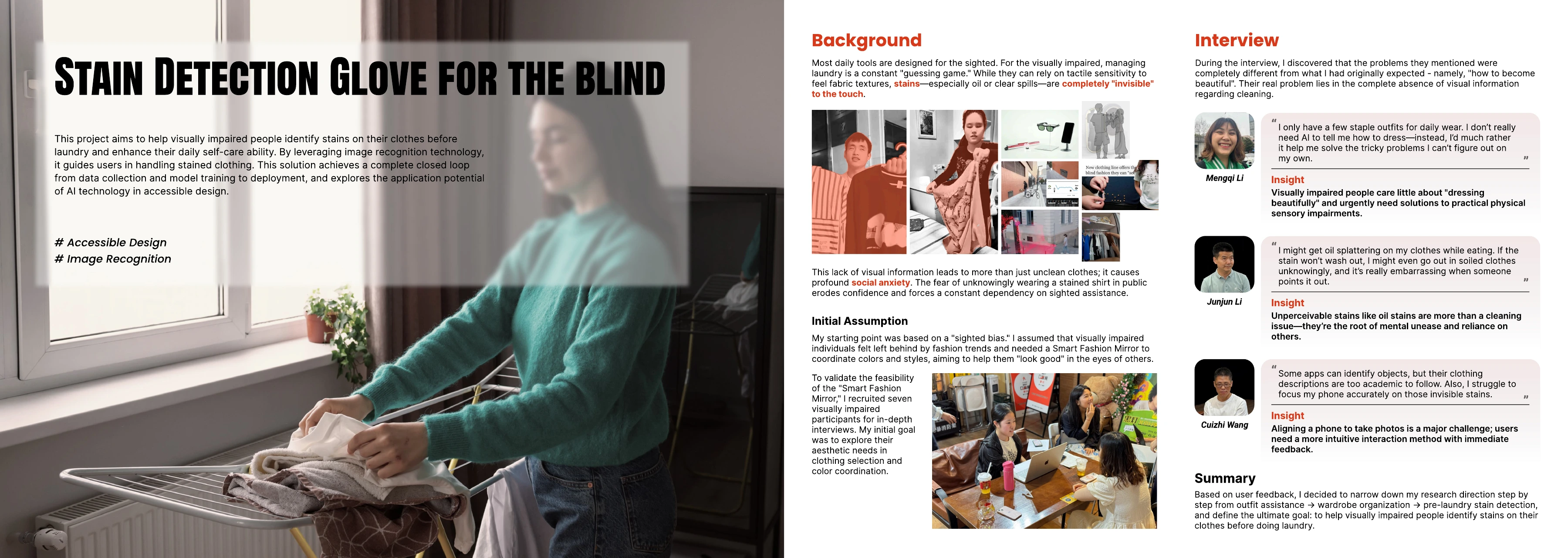
Most everyday laundry tools assume that people can see. Fabric texture can be felt, but stains such as oil or clear spills can be invisible to touch. Not knowing whether a garment is clean can create social anxiety and a reliance on sighted assistance.
Interview findings
I initially imagined a smart fashion mirror that could help with colors and outfit coordination. Interviews with seven visually impaired participants challenged this sighted assumption. Their priority was practical independence, particularly identifying stains and finding them before washing.
The research direction narrowed from outfit assistance, to wardrobe organization, and finally to pre-laundry stain detection.

Practical support
Participants wanted help with difficult tasks they could not resolve independently, rather than AI telling them how to dress.
Confidence in clothing care
Unnoticed stains were linked to embarrassment, uncertainty, and dependence on others.
Location and cleaning advice
Beyond stain detection, users need clear location descriptions and practical cleaning advice they can act on independently.
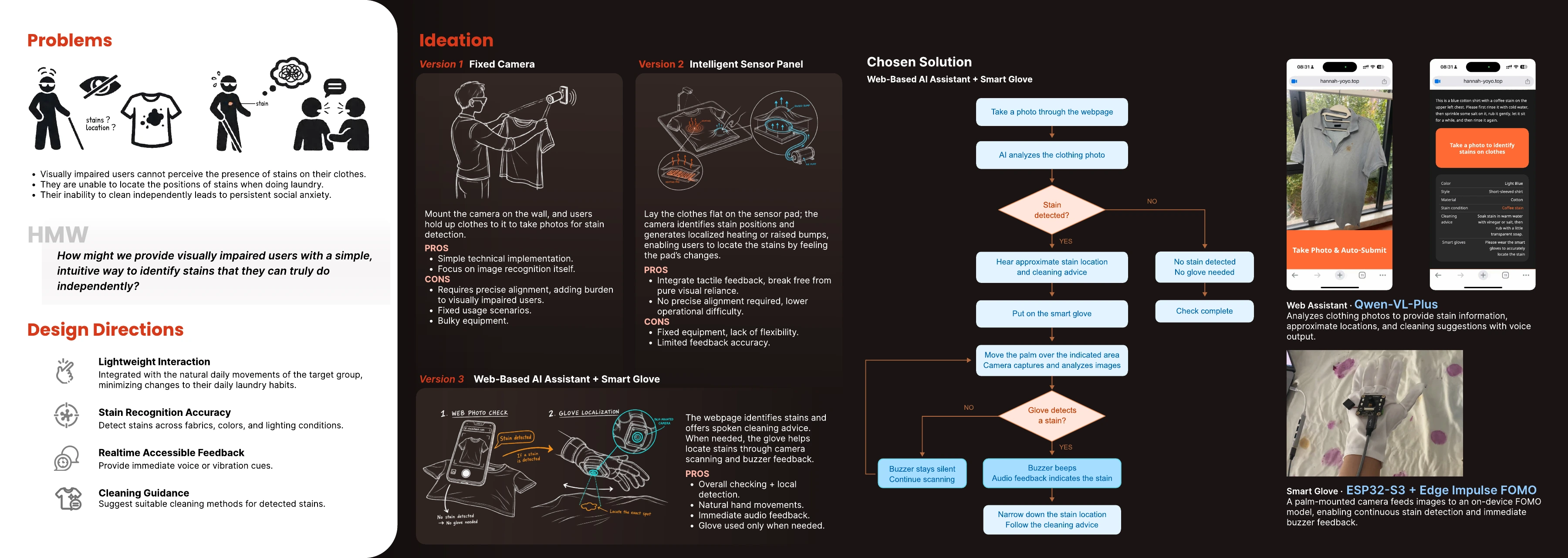
HOW MIGHT WEGive visually impaired people a simple, intuitive way to identify stains that they can truly use independently?
Design direction
Natural interactionFit into familiar hand movements and existing laundry habits.
Reliable recognitionExplore detection across fabrics, colors, and lighting conditions.
Accessible feedbackTranslate visual results into immediate sound or vibration.
Actionable guidanceConnect finding a stain with advice on how to treat it.
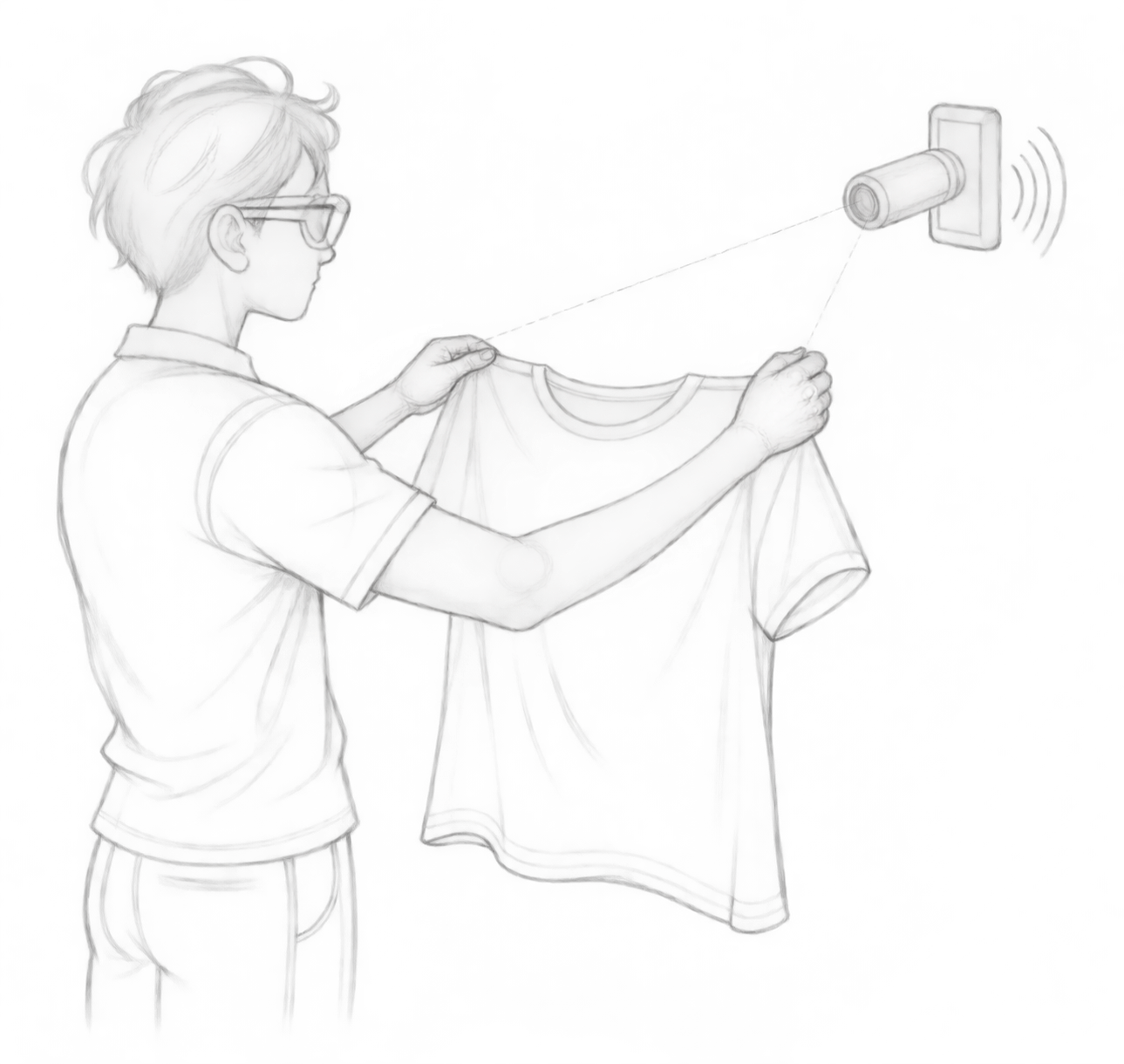
Fixed Camera
Mount the camera on the wall, and users hold up clothes to it to take photos for stain detection.
Pros
- Simple technical implementation.
- Focus on image recognition itself.
Cons
- Requires precise alignment, adding burden to visually impaired users.
- Fixed usage scenarios.
- Bulky equipment.
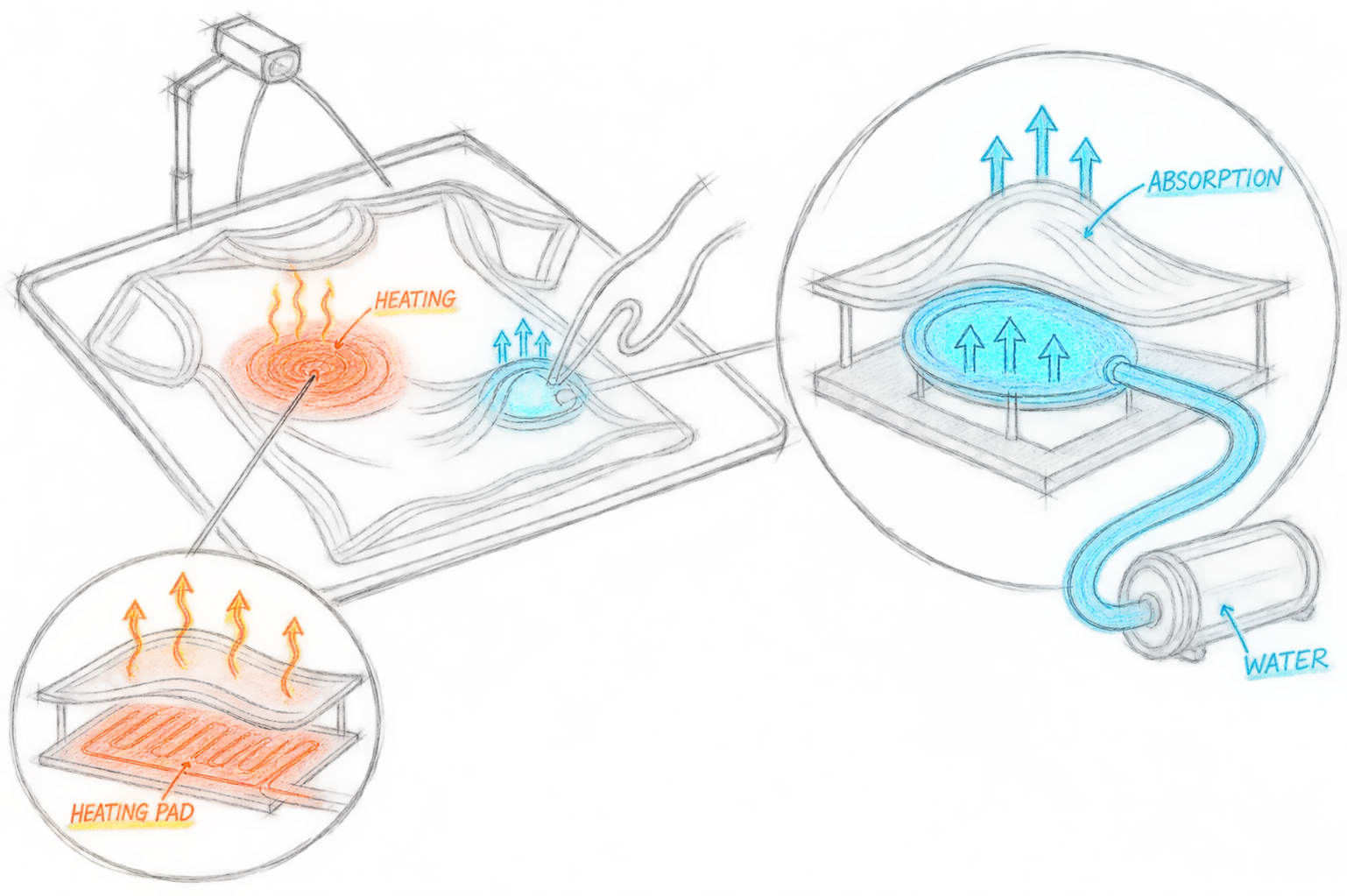
Intelligent Sensor Panel
Lay the clothes flat on the sensor pad. The camera identifies stain positions, and the pad produces localized heat or raised bumps so users can find the stains by touch.
Pros
- Tactile feedback reduces reliance on vision.
- No precise alignment required, making the system easier to use.
Cons
- Fixed equipment limits flexibility.
- Limited feedback accuracy.
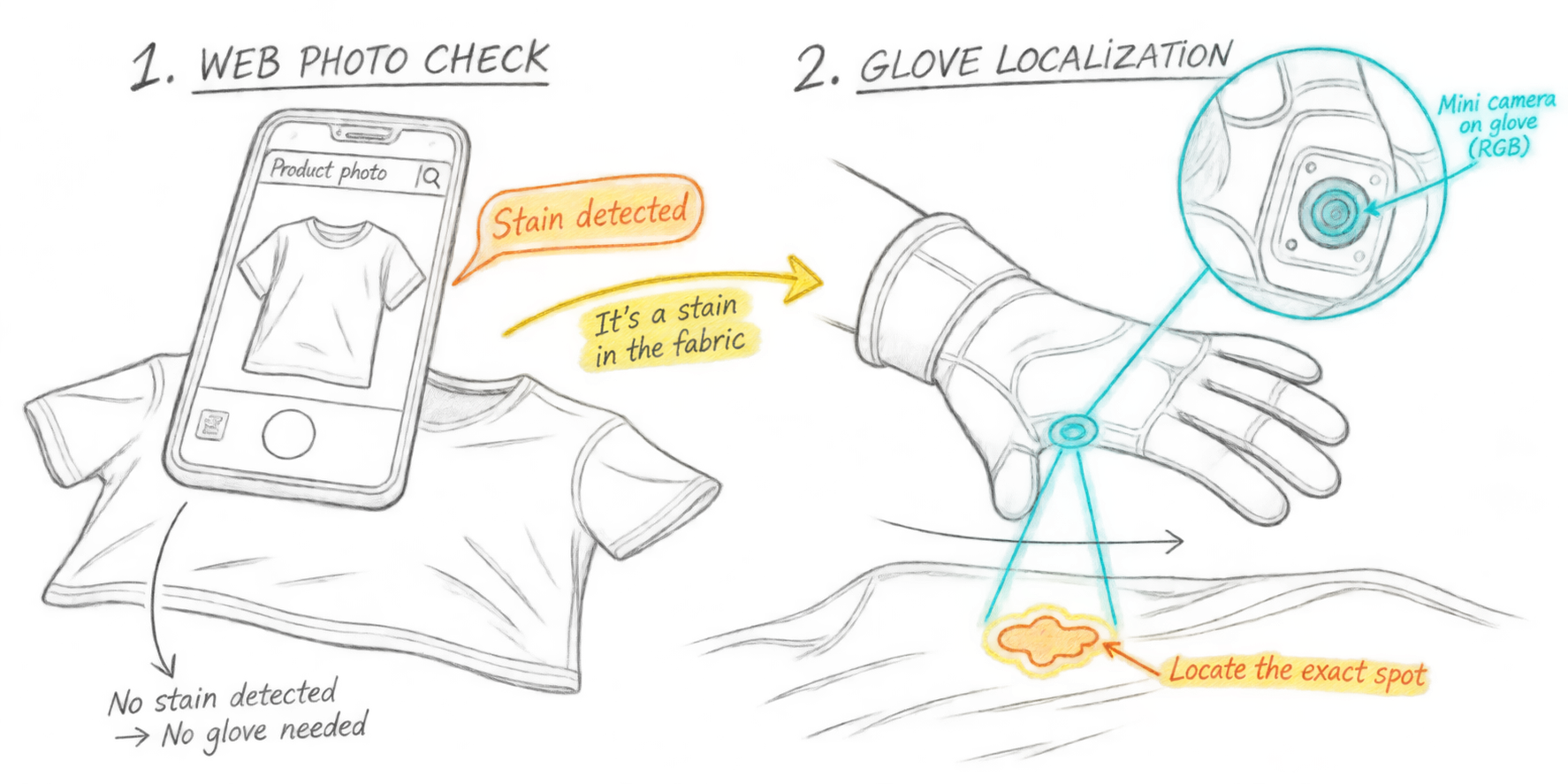
Web-Based AI Assistant + Smart Glove
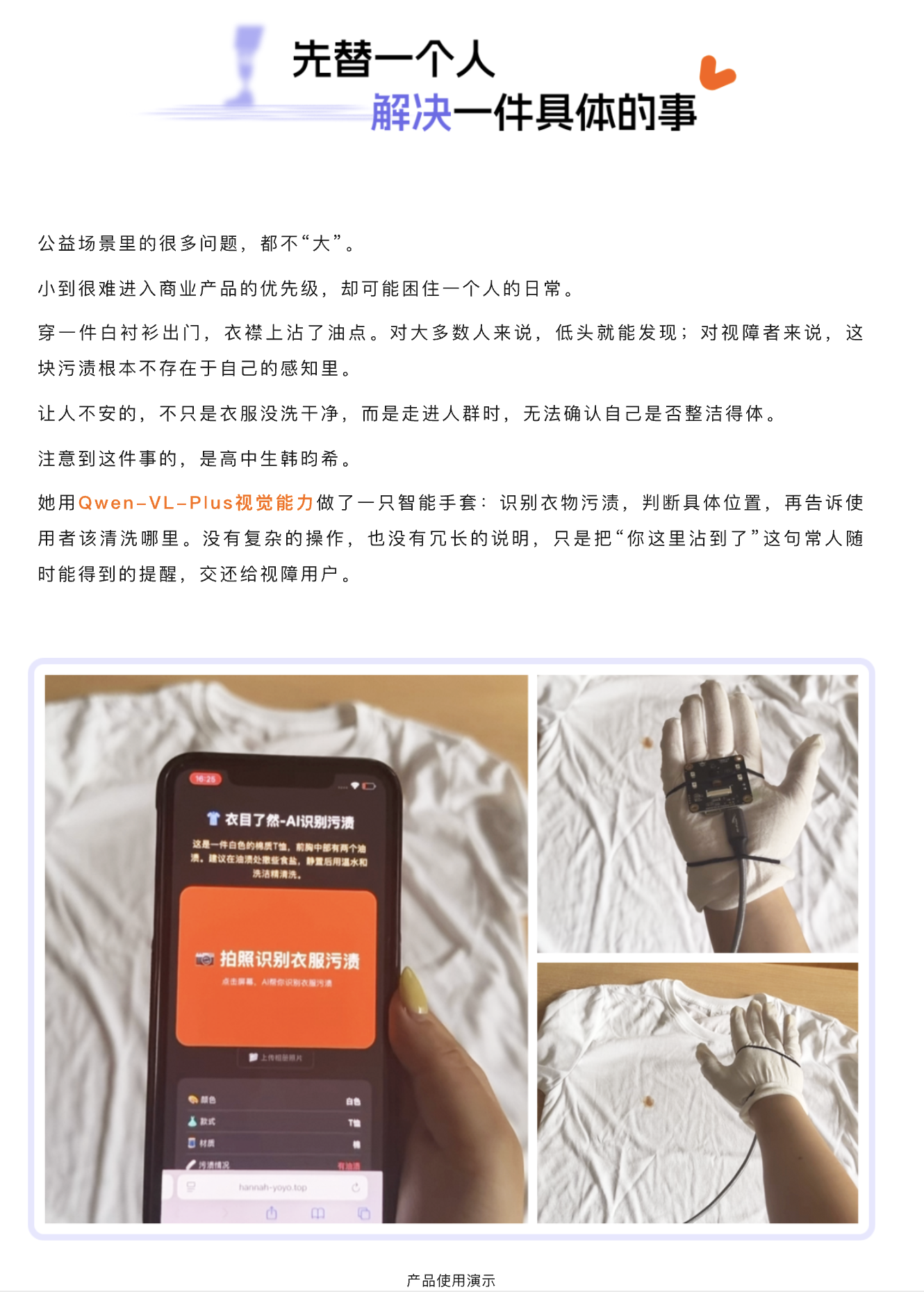
The webpage identifies stains and offers spoken cleaning advice. When needed, the glove helps locate stains through camera scanning and buzzer feedback.
Pros
- Overall checking and local detection.
- Natural hand movements.
- Immediate audio feedback.
- Glove used only when needed.
Why a glove?
A fixed wall camera was technically straightforward, but still required precise alignment and a fixed place to use it. A sensor panel introduced tactile feedback, but limited flexibility and localization accuracy.
The selected direction separates the task into two stages: the web assistant checks the garment overall, while the glove is used only when a stain needs to be located more precisely.
Web assistant and smart glove
Web assistant · Qwen-VL-Plus
Analyzes a garment photo and speaks information about the stain, its approximate location, and cleaning suggestions.
Smart glove · ESP32-S3 + FOMO
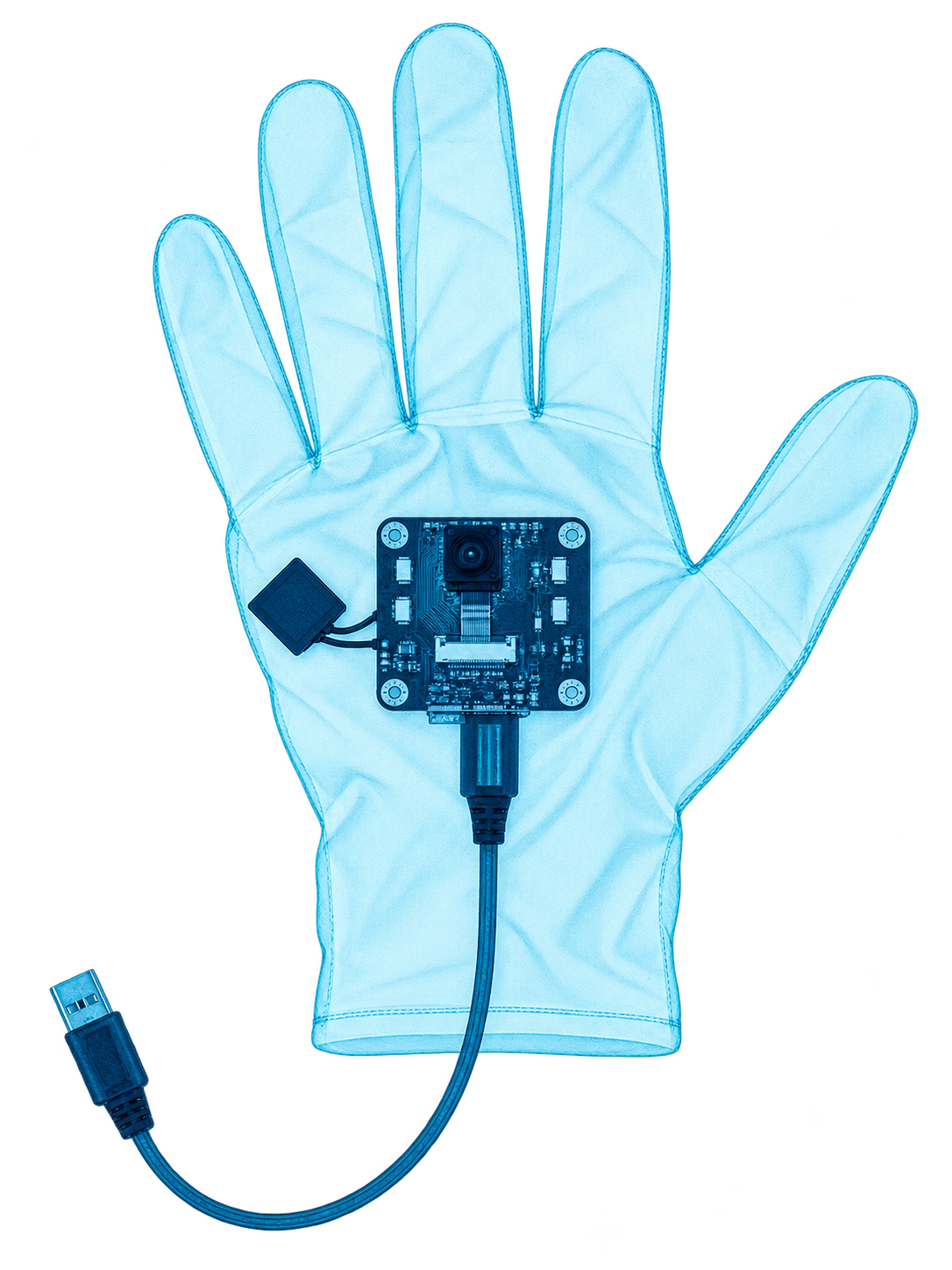
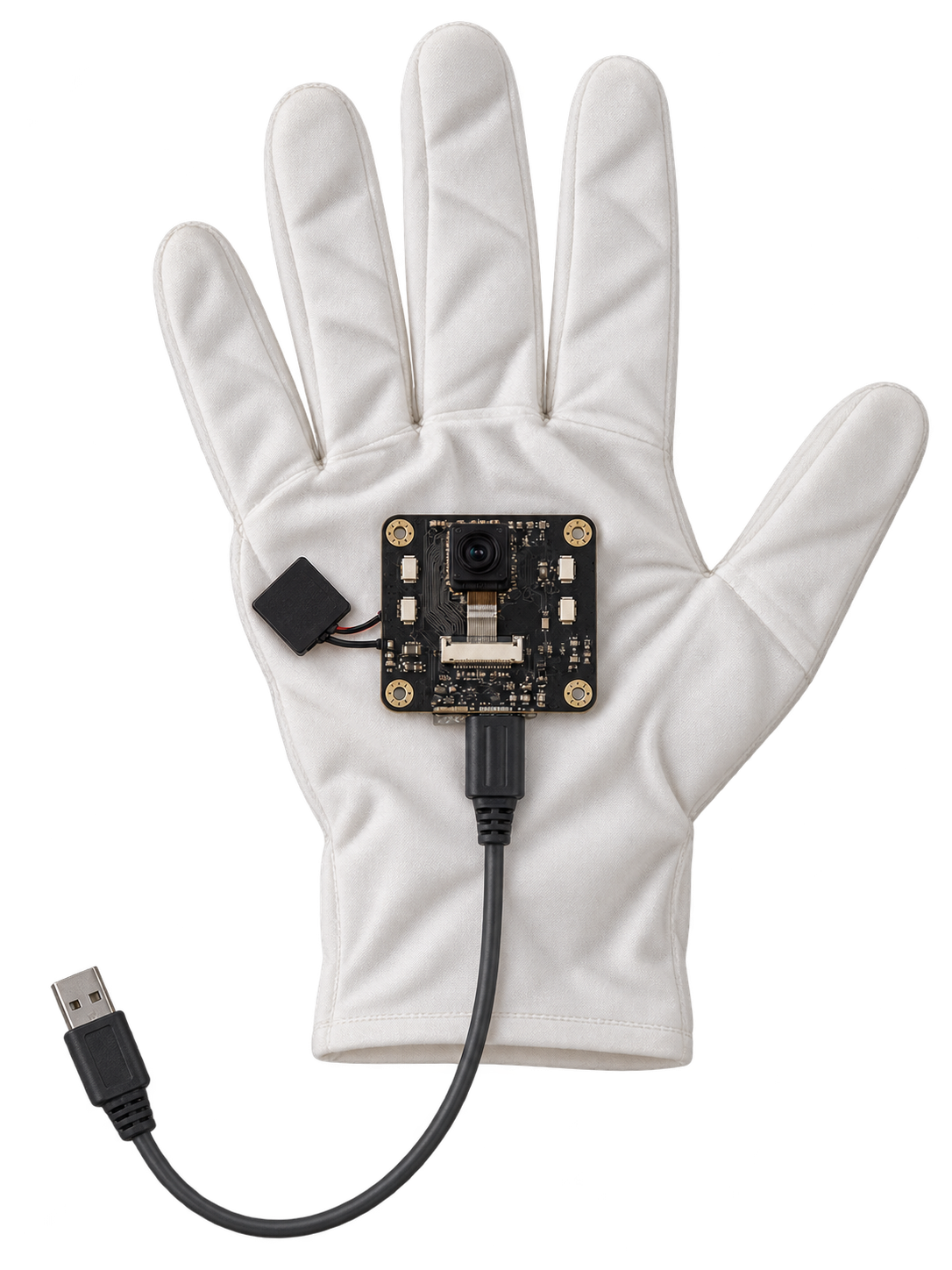
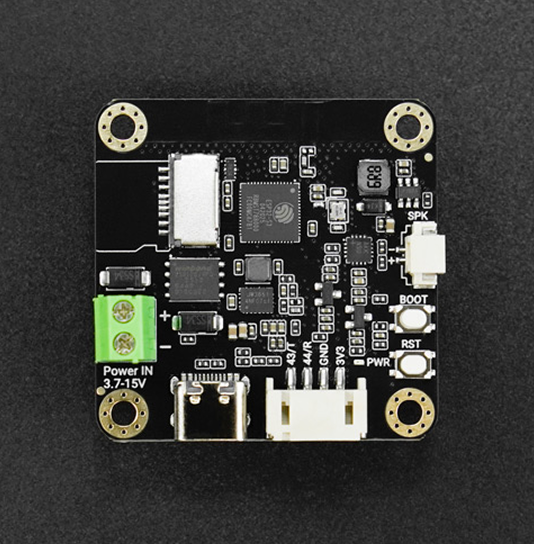
A palm-mounted camera feeds images to an on-device detection model. Sound signals whether a stain has been detected as the hand moves across the garment.
User flow
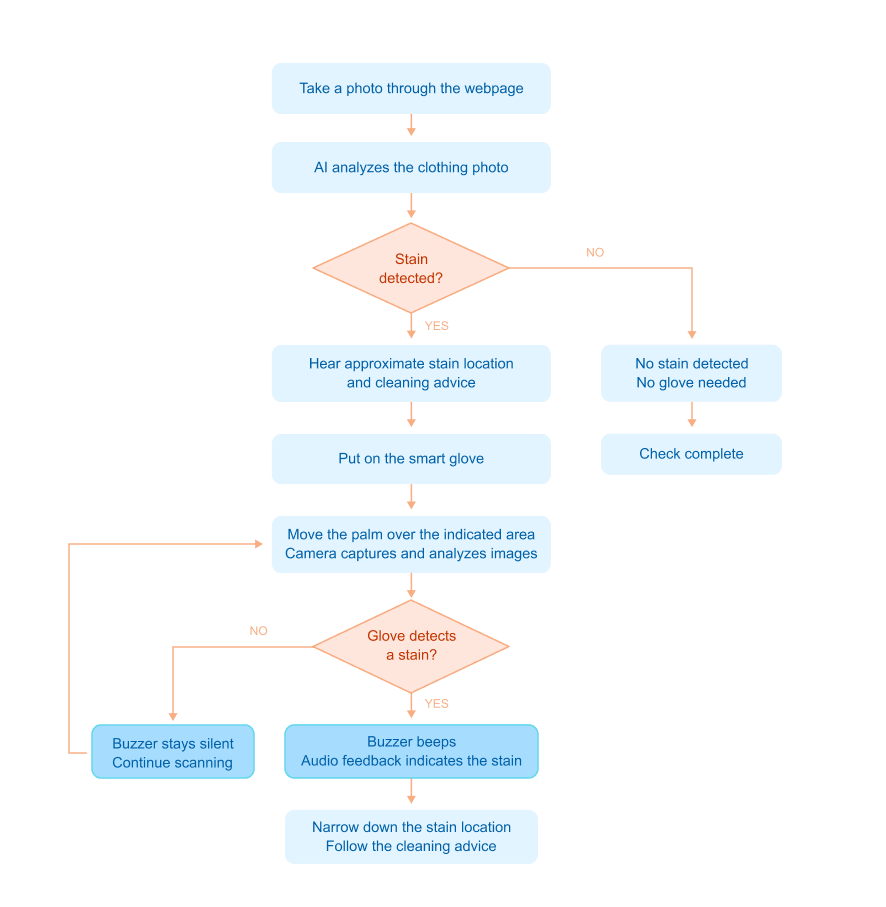
- Photograph the garmentTake a photo through the web assistant.
- Listen to the resultIf no stain is detected, the check is complete. Otherwise, hear an approximate location and cleaning advice.
- Scan with the gloveMove the palm over the indicated area using natural strokes.
- Follow the feedbackThe buzzer sounds when a stain is detected and remains silent otherwise.
- Narrow down the locationMake smaller, repeated movements to locate the spot before pre-treatment.
Prototype
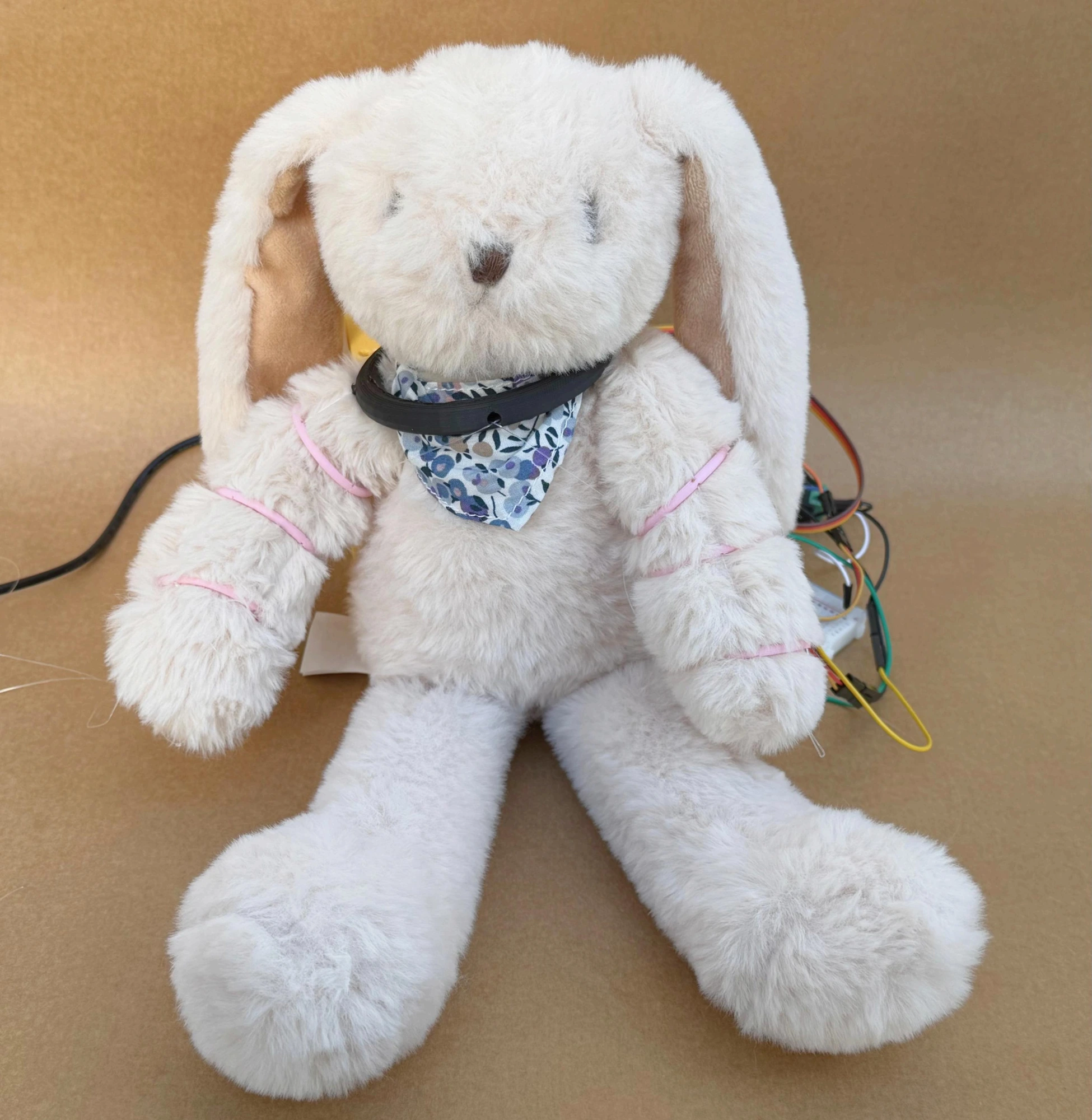
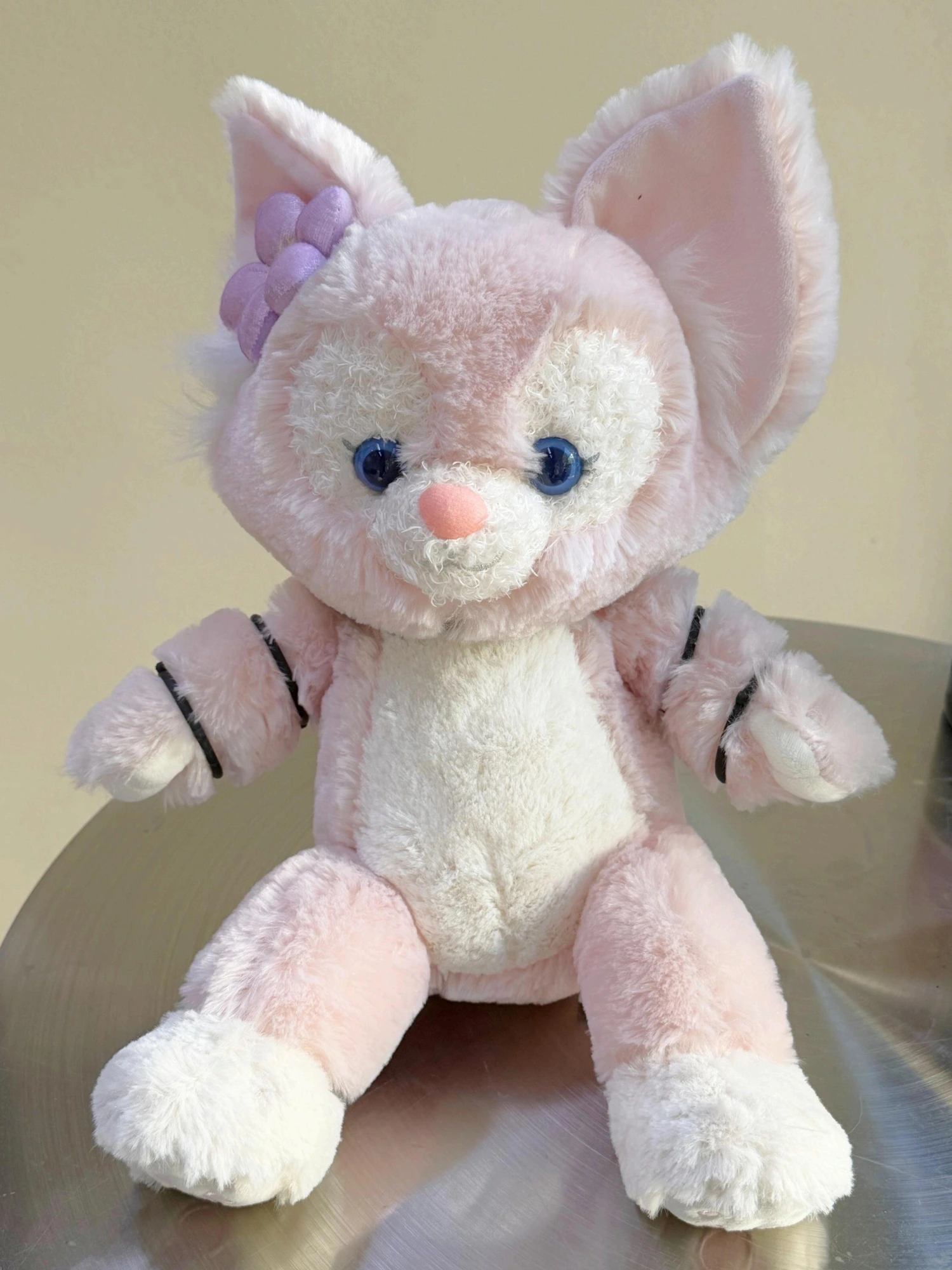
The final prototype pairs a web assistant for the overall garment check with a wearable glove for locating stains more precisely.
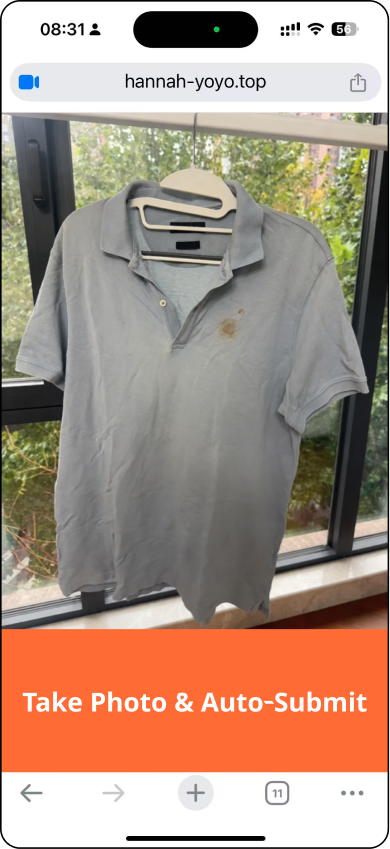
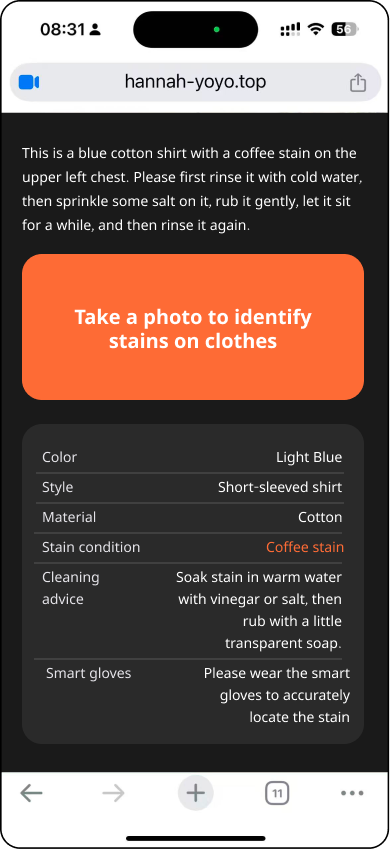
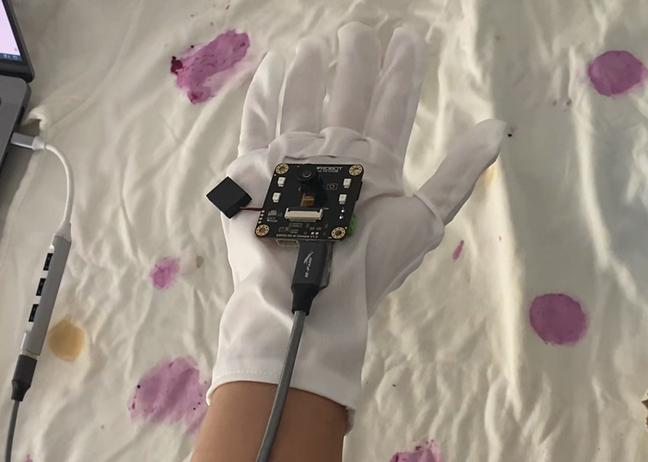
Final product in use
Glove interaction
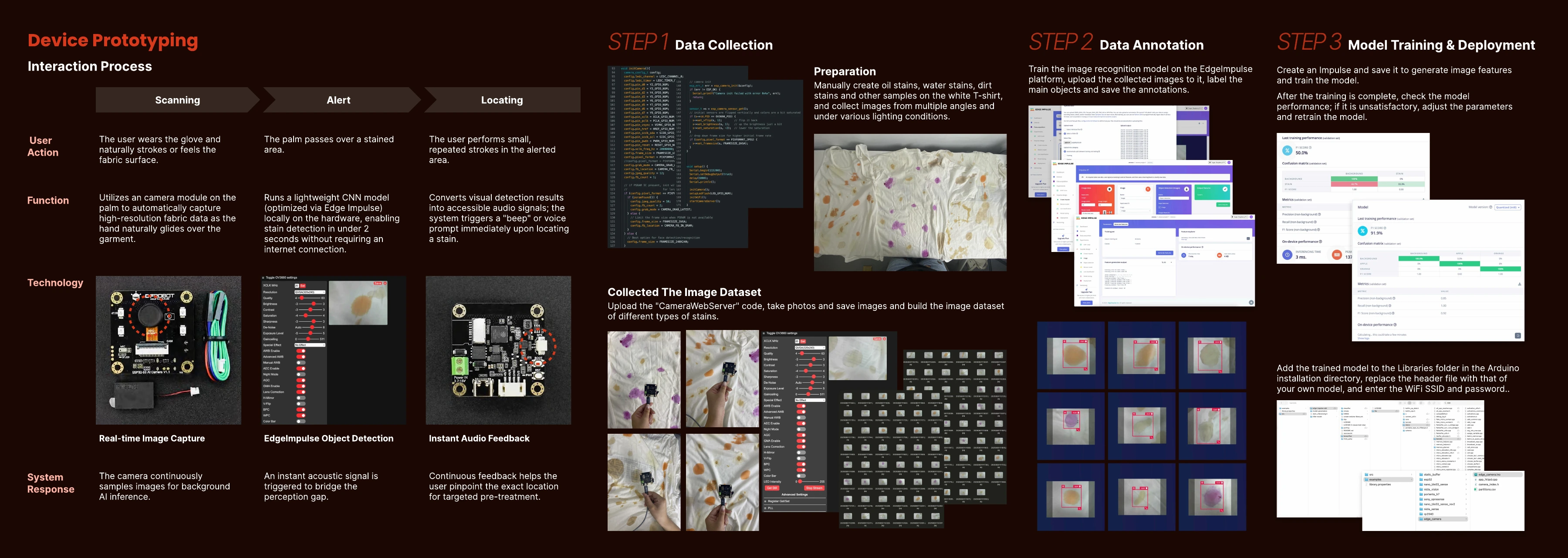
Scanning → Alert → Locating
Scanning
- User action
- The user wears the glove and naturally strokes or feels the fabric surface.
- Function
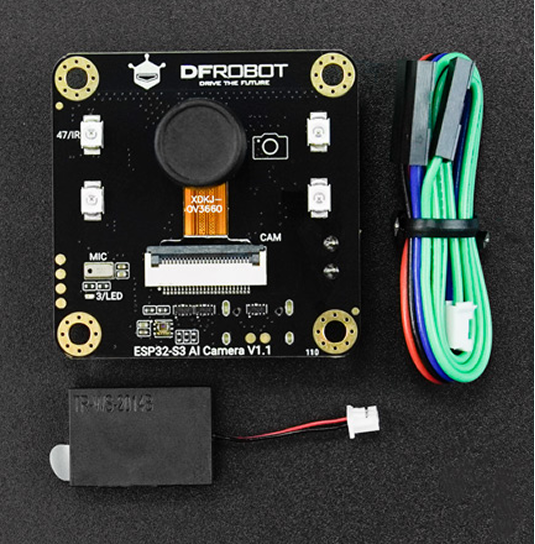
- Utilizes a camera module on the palm to automatically capture high-resolution fabric data as the hand naturally glides over the garment.
System response
The camera continuously samples images for background AI inference.
Alert
- User action
- The palm passes over a stained area.
- Function
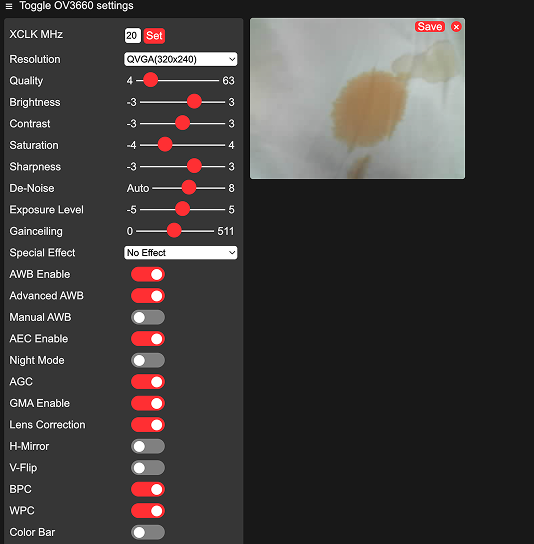
- Runs a lightweight CNN model (optimized via Edge Impulse) locally on the hardware, enabling stain detection in under 2 seconds without requiring an internet connection.
System response
An instant acoustic signal is triggered to bridge the perception gap.
Locating
- User action
- The user performs small, repeated strokes in the alerted area.
- Function
- Converts visual detection results into accessible audio signals; the system triggers a beep or voice prompt immediately upon locating a stain.
System response
Continuous feedback helps the user pinpoint the exact location for targeted pre-treatment.
Building the prototype
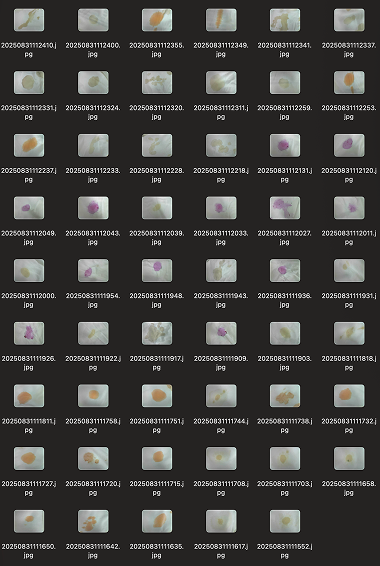
Collect the dataset
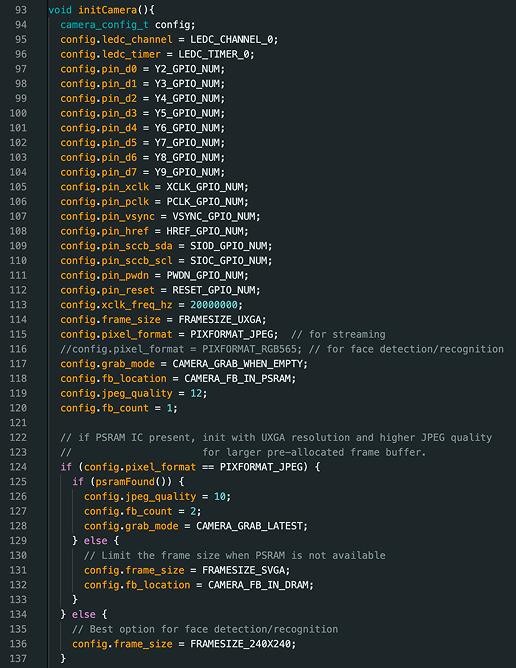
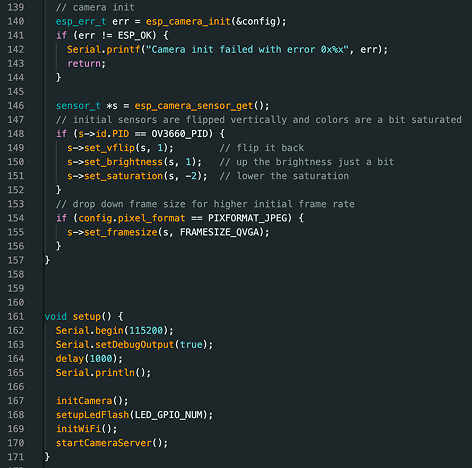
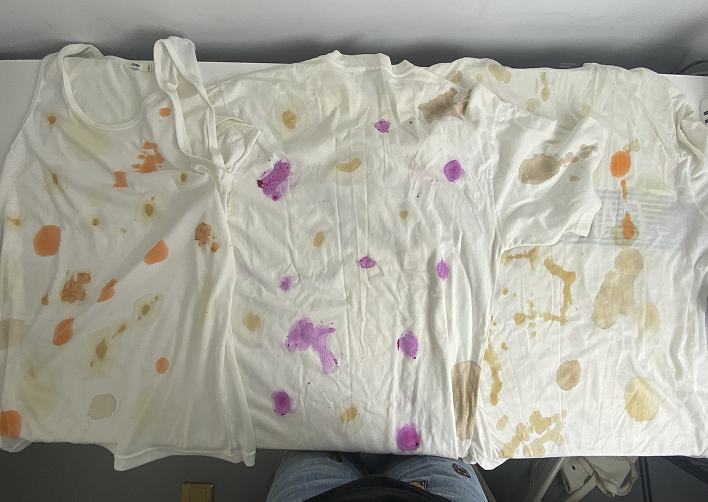
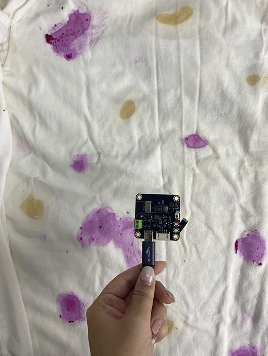
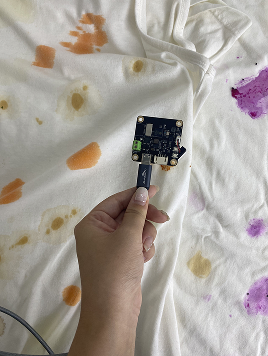
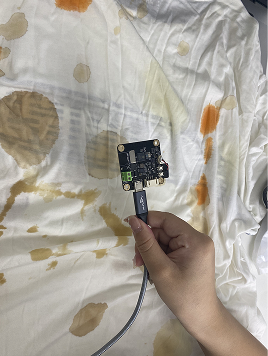
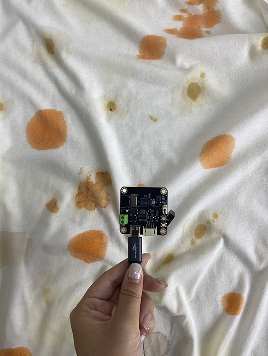
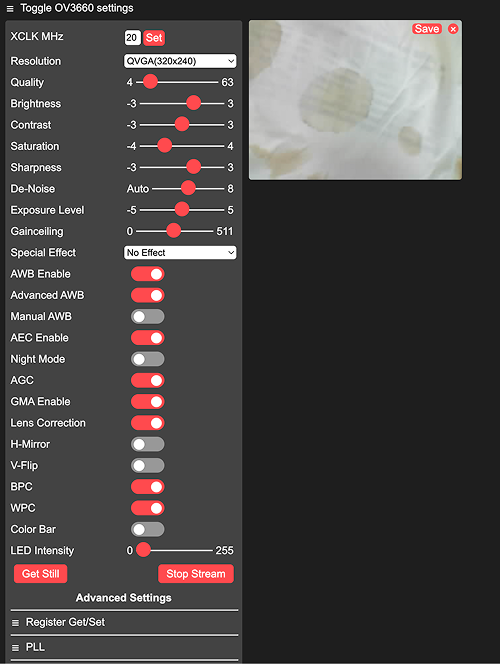
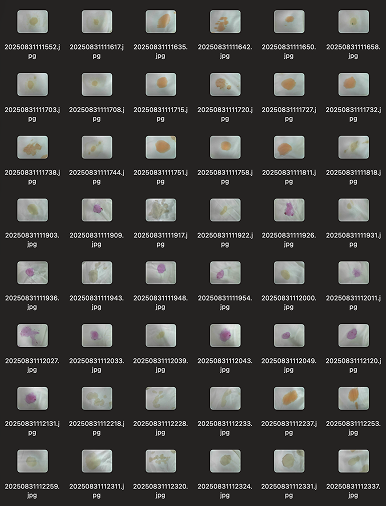
Configure the camera, prepare stained garments, and capture fabric samples from multiple angles and distances.
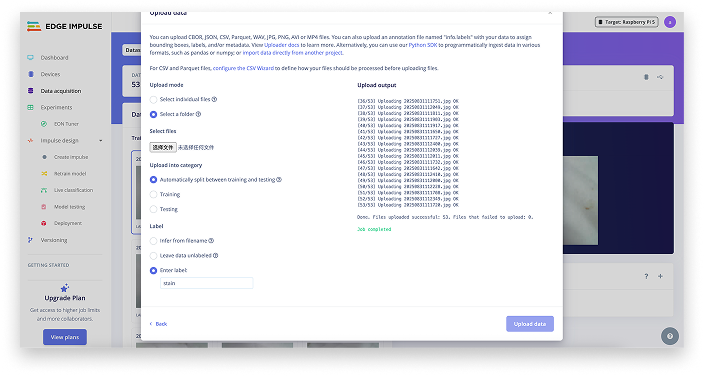
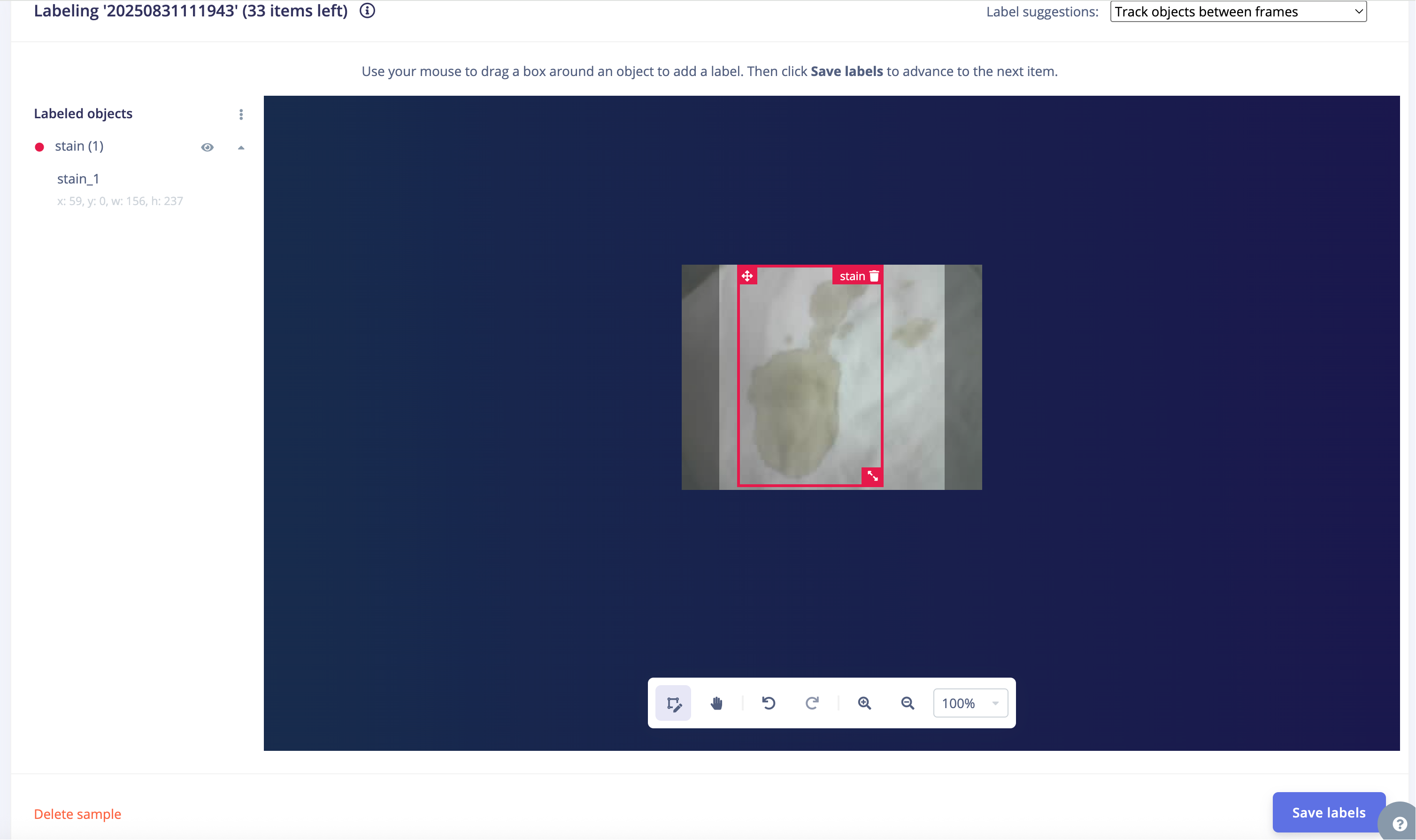
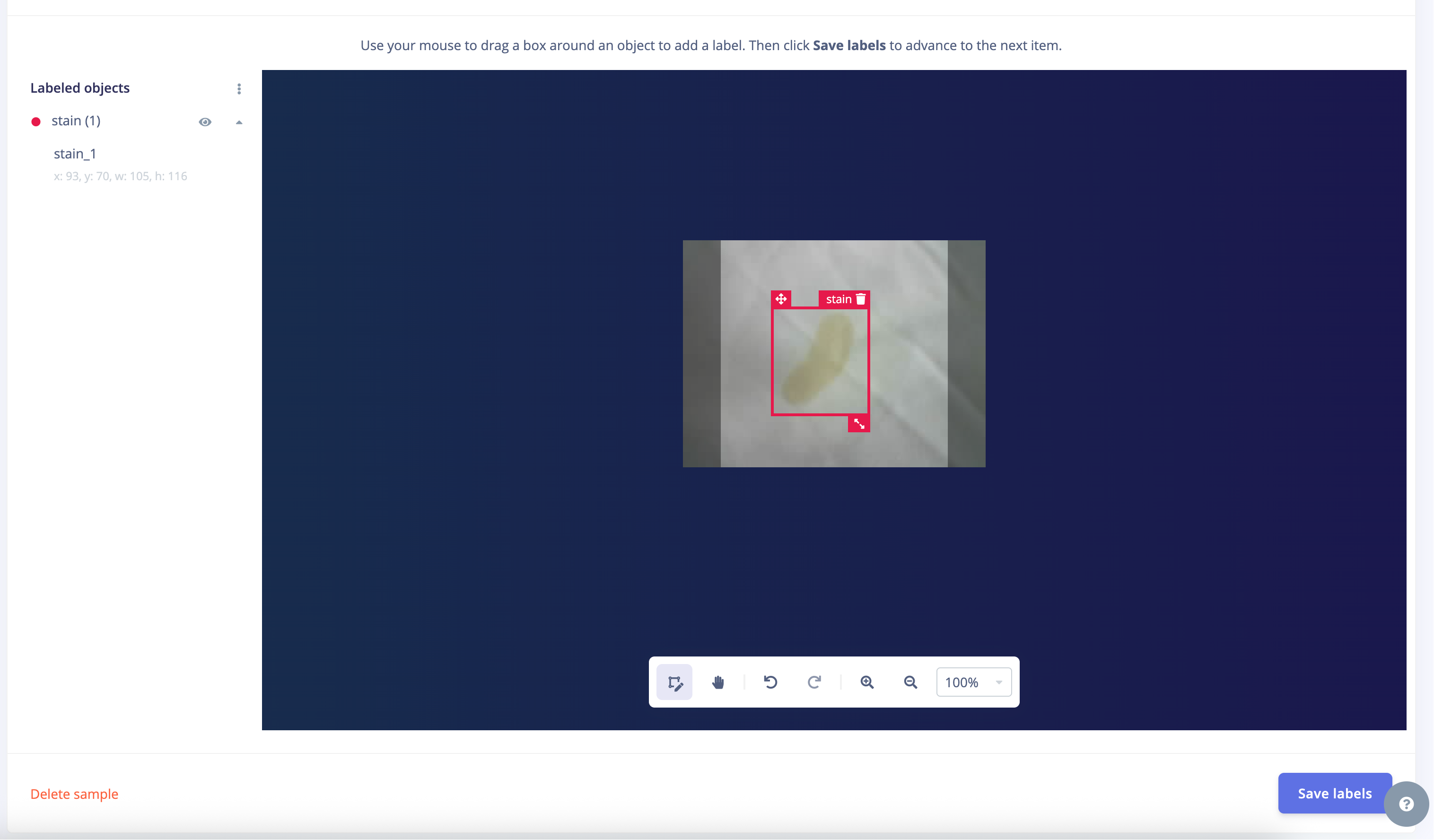
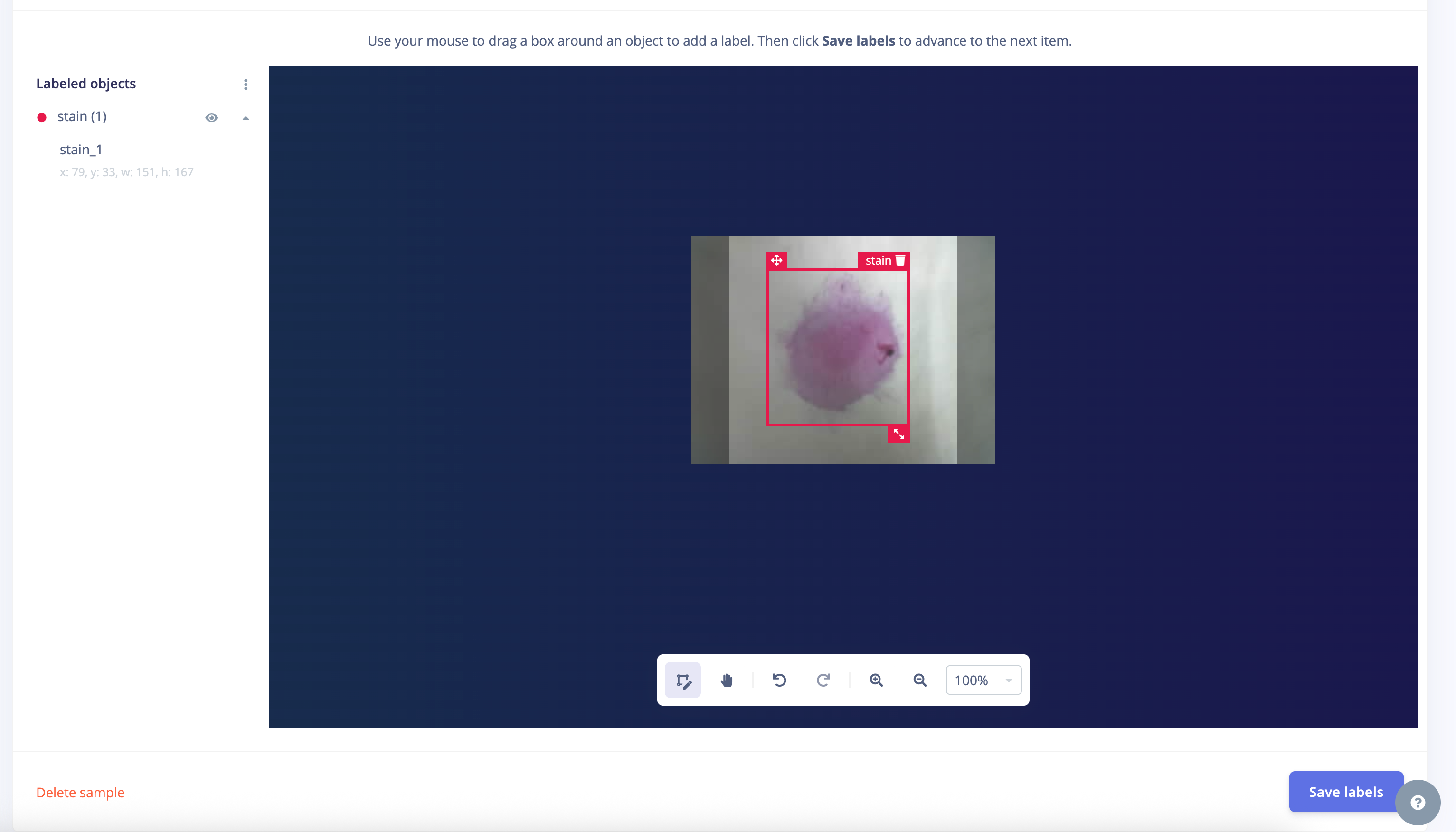
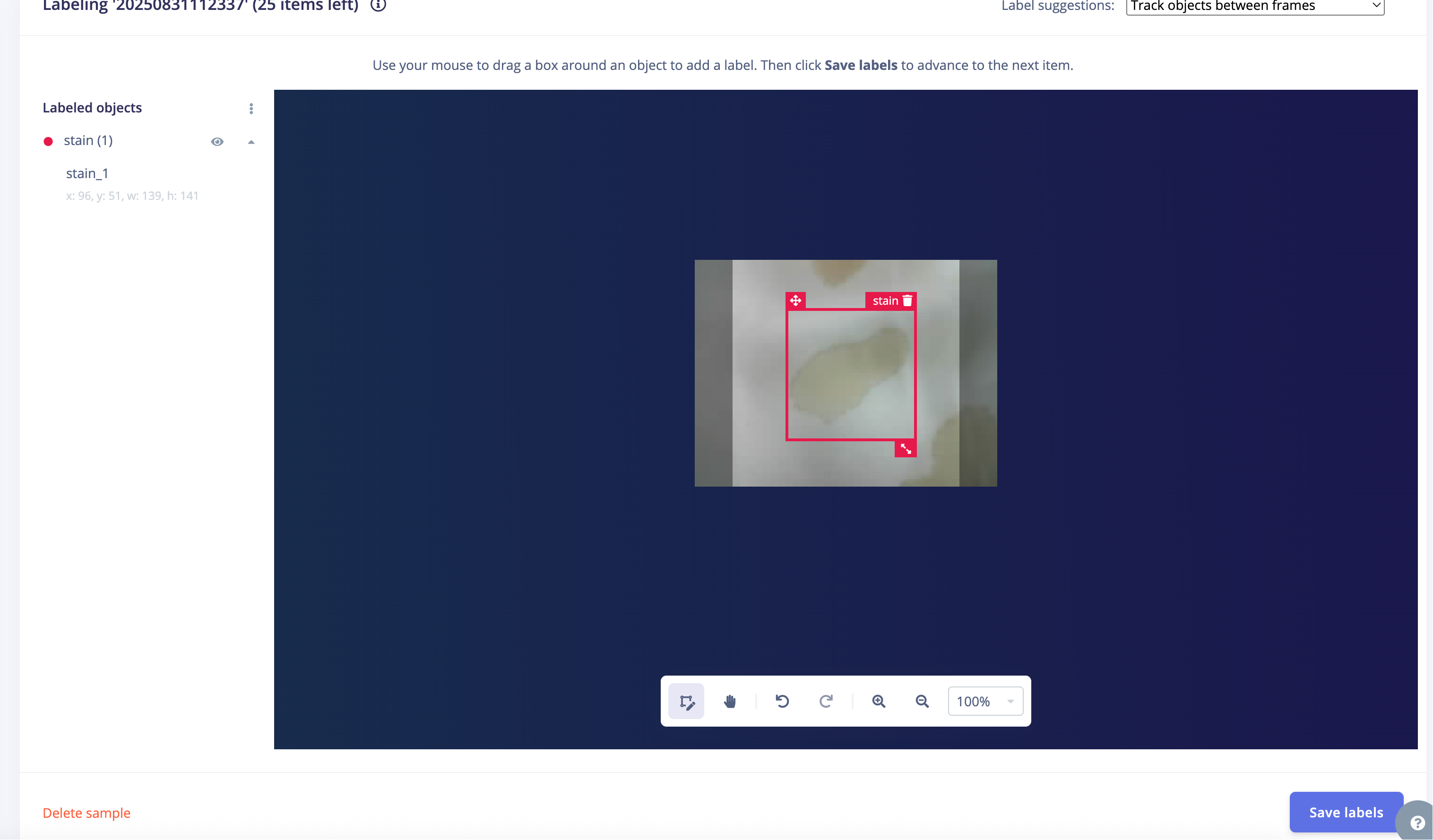
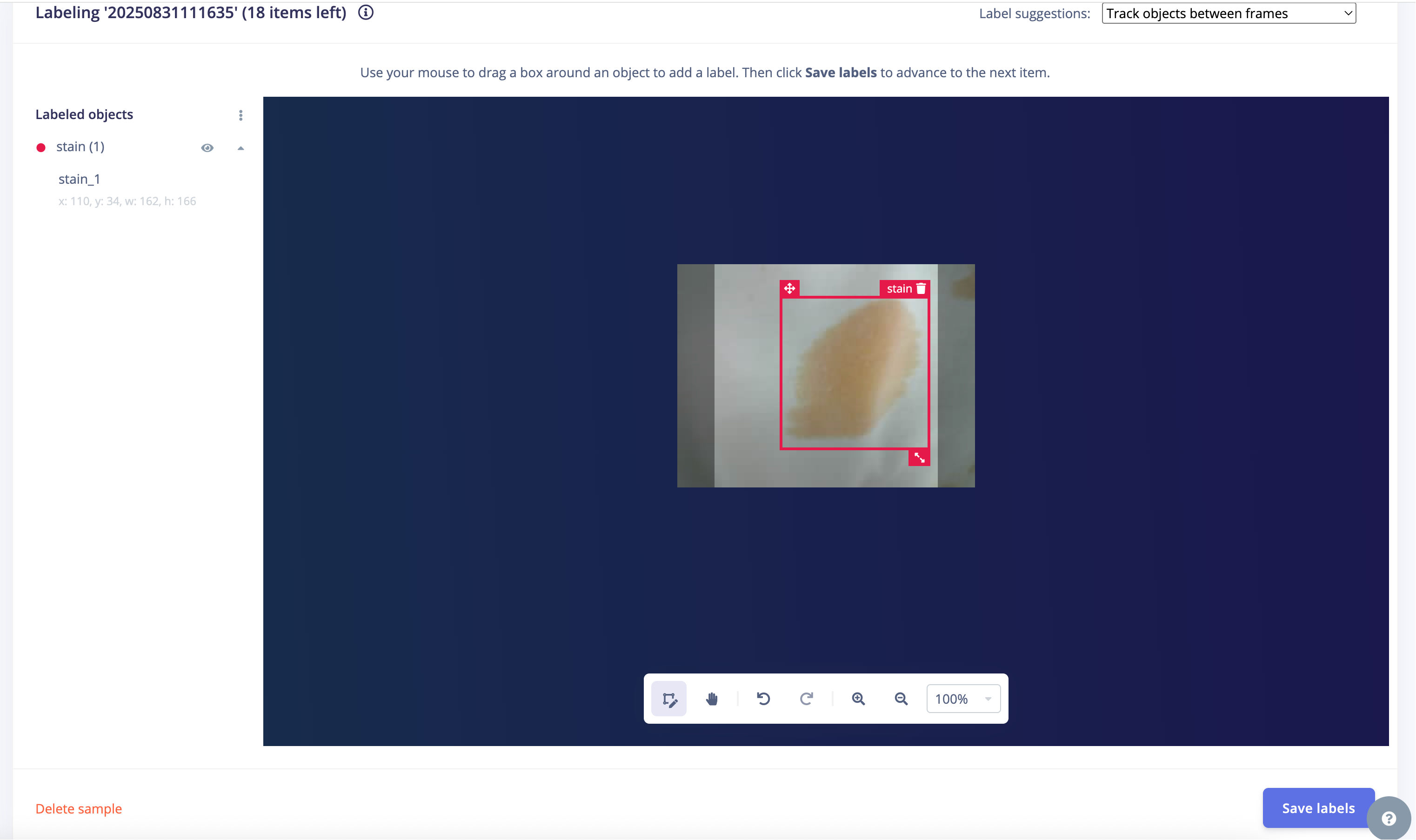
Upload and annotate
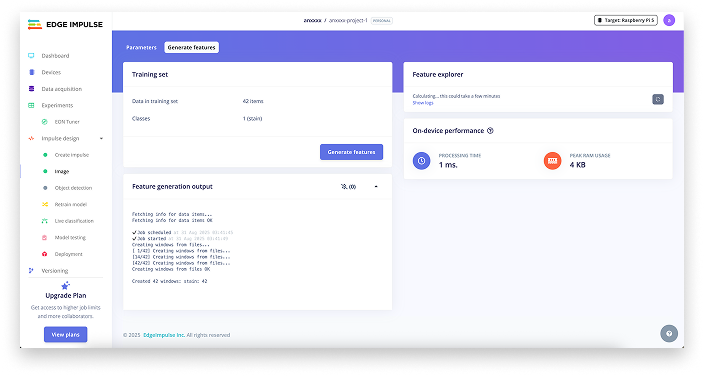
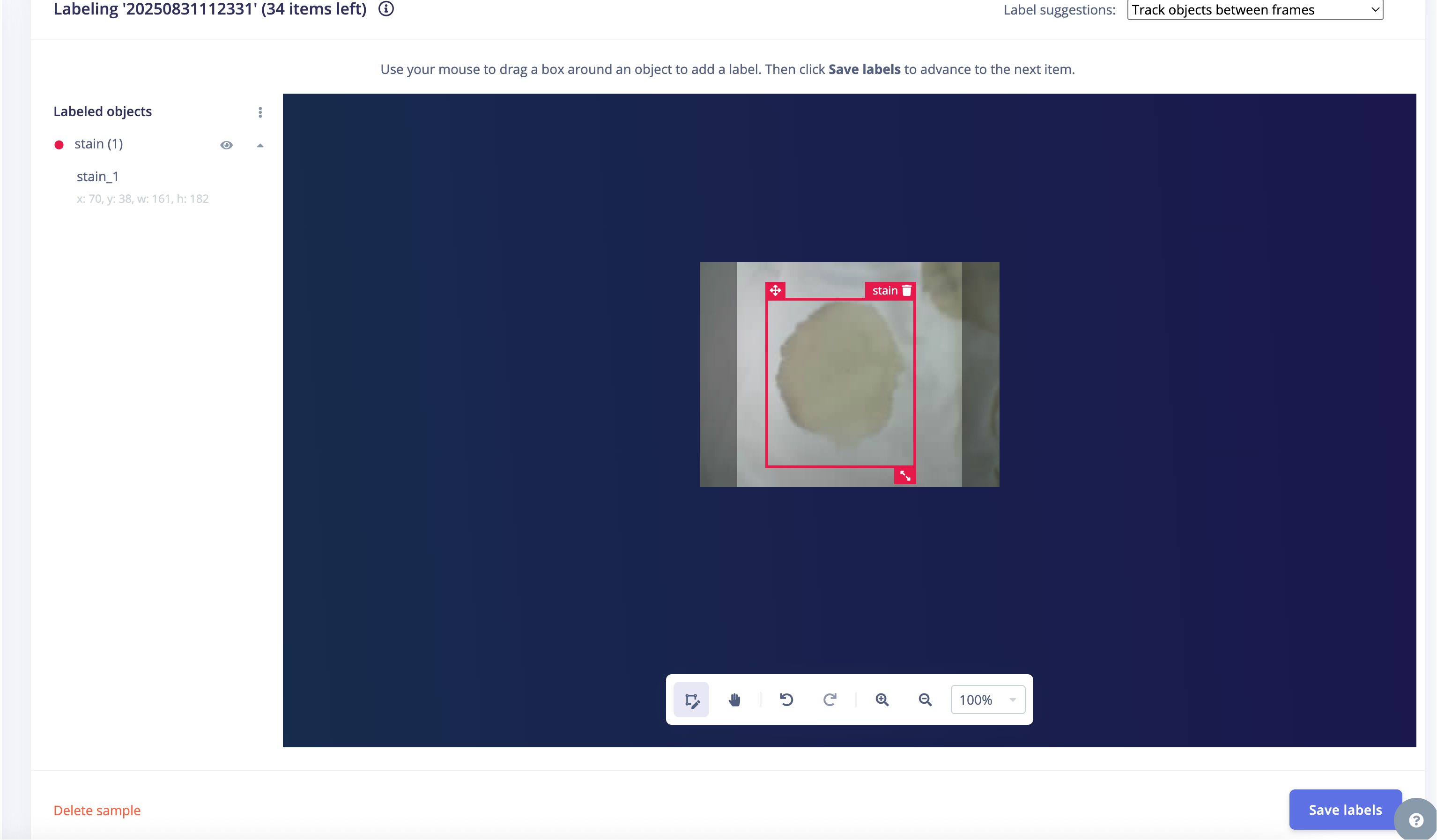
Upload the collected images to Edge Impulse, label the stained regions, and configure the processing and learning blocks.
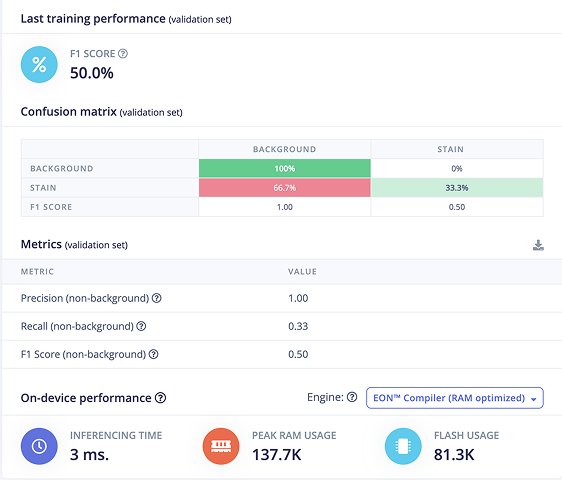
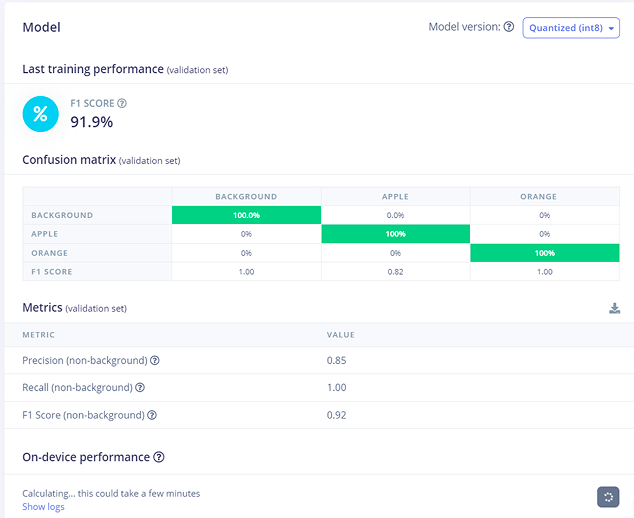
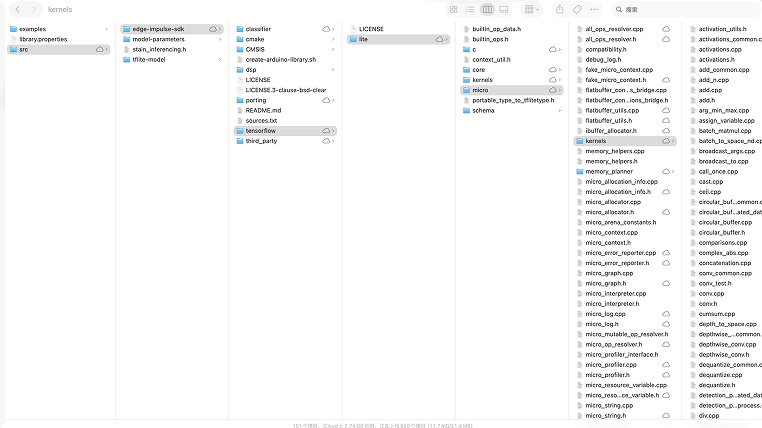
Train, review, and deploy
Review training results, iterate on the detection model, and integrate the exported files into the device project.
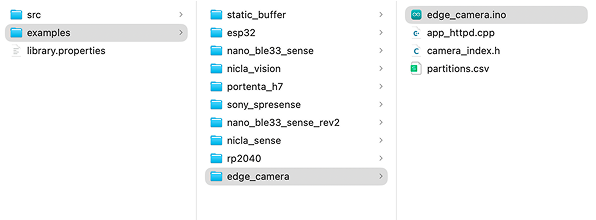
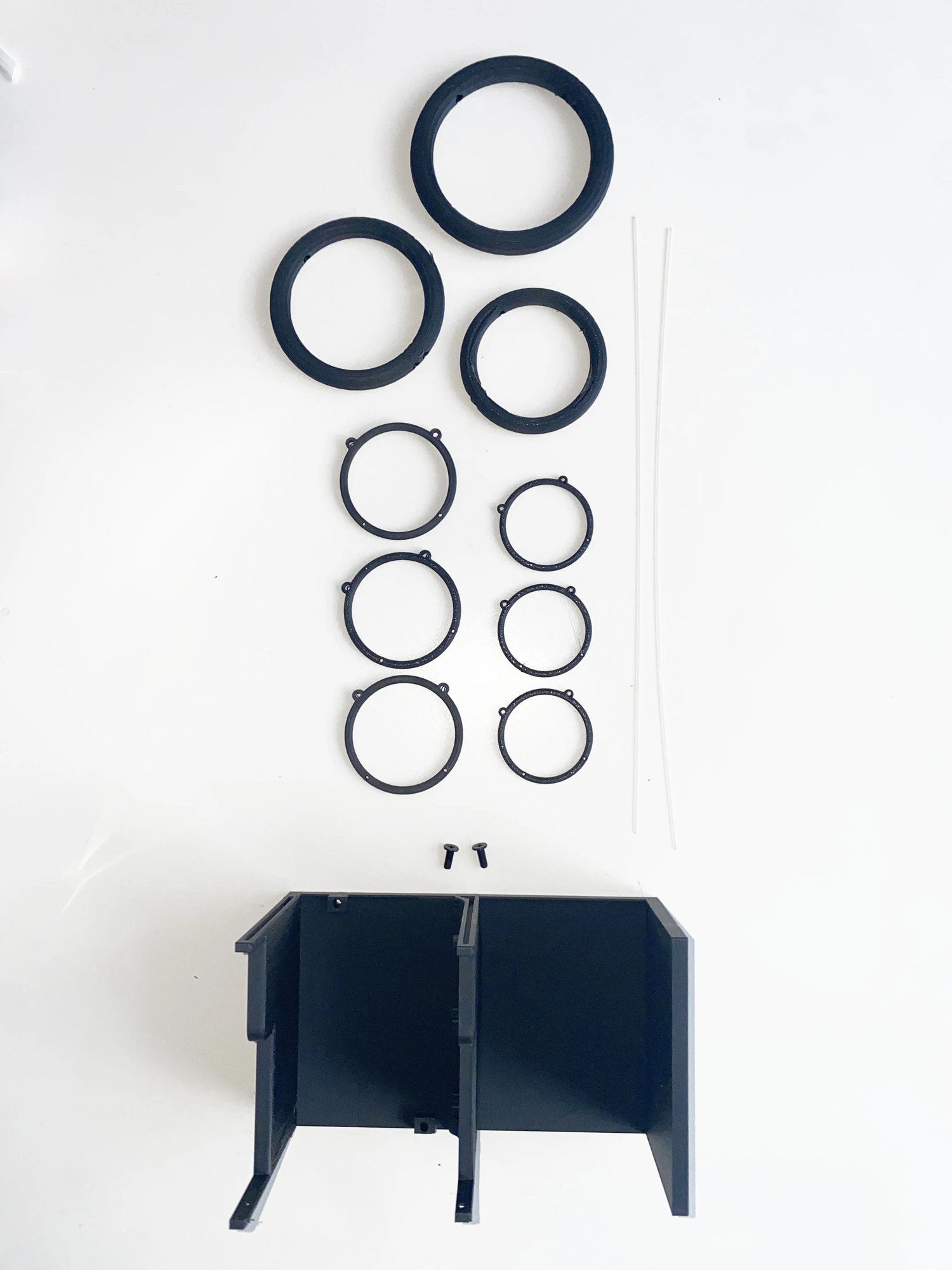
Hardware integration
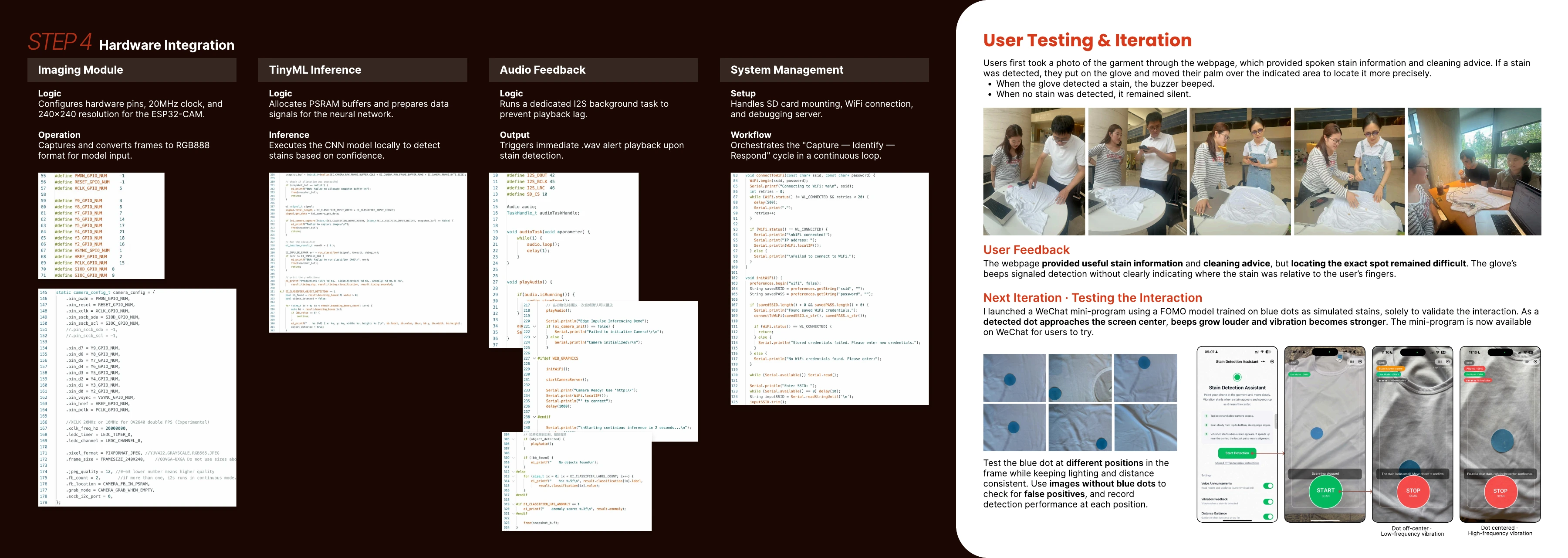
- Image capture
- Configure the camera, capture frames, and convert them to RGB888 for the model.
- Local inference
- Prepare image buffers and run the lightweight model on the device.
- Audio feedback
- Use a dedicated I2S background task to play an alert when a stain is detected.
- System management
- Coordinate camera capture, inference, audio output, storage, and the debugging workflow.
Testing and iteration
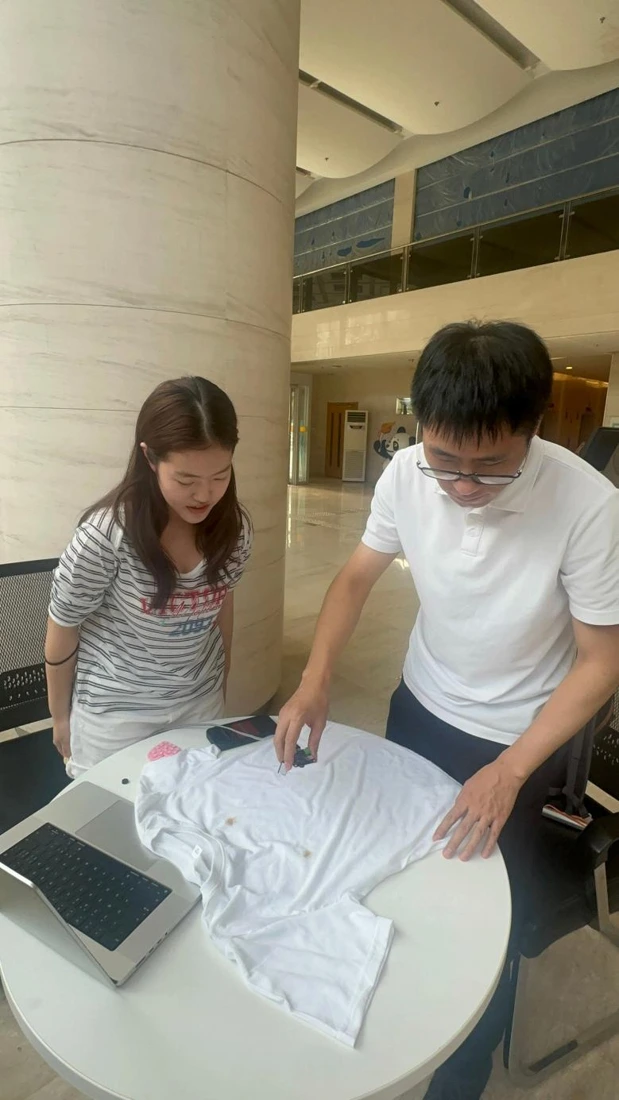
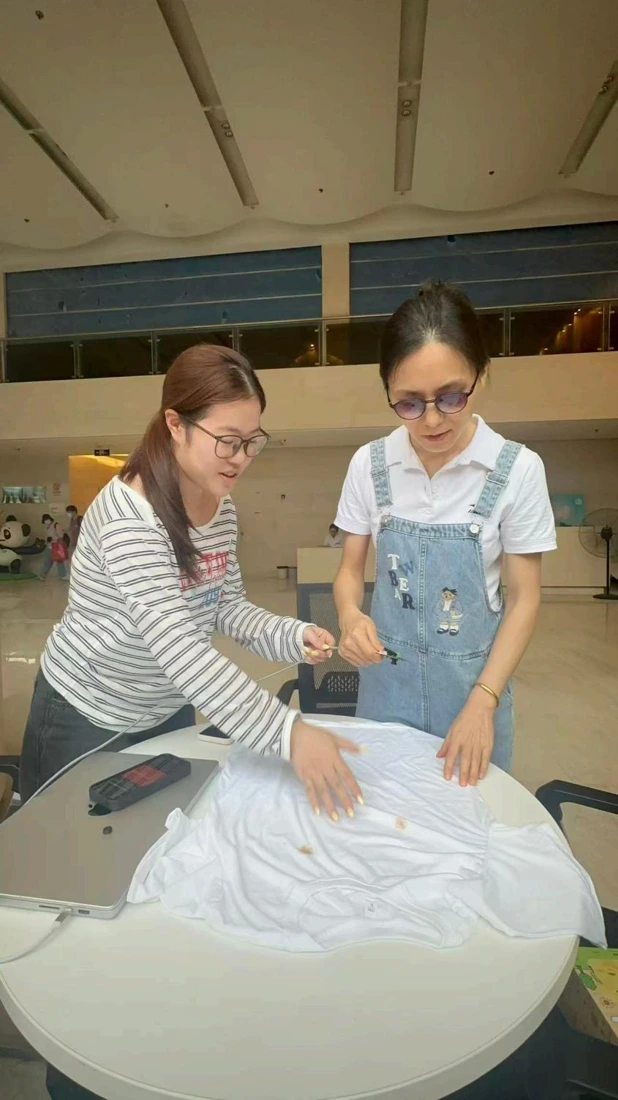
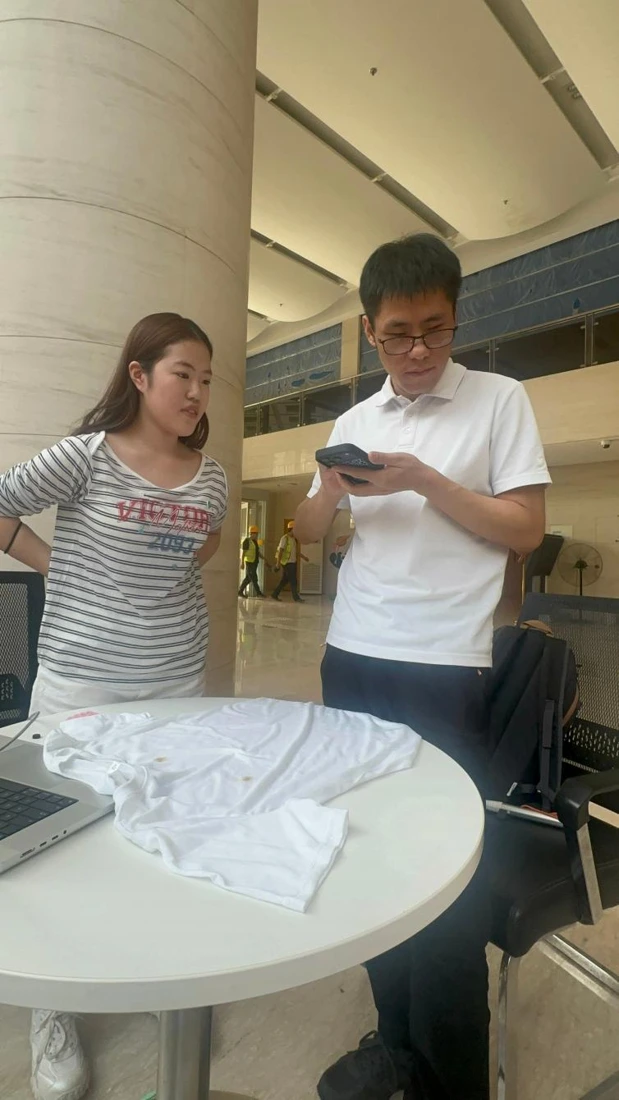
Users first checked a garment with the web assistant, then moved the glove over the indicated area. The buzzer made detection perceptible, but did not clearly communicate where the stain was relative to their fingers.
Localization limitations
The web assistant's stain information and cleaning advice were useful, but exact localization remained difficult. A binary beep indicated that something had been detected without giving enough directional information.
Directional feedback
I built a WeChat mini-program to test more informative feedback: as the detected target moves toward the center of the frame, beeps become louder and vibration grows stronger.
Interaction validation only. This iteration uses blue dots as simulated stains to test the feedback interaction. It is not evidence of validated real-stain detection accuracy.
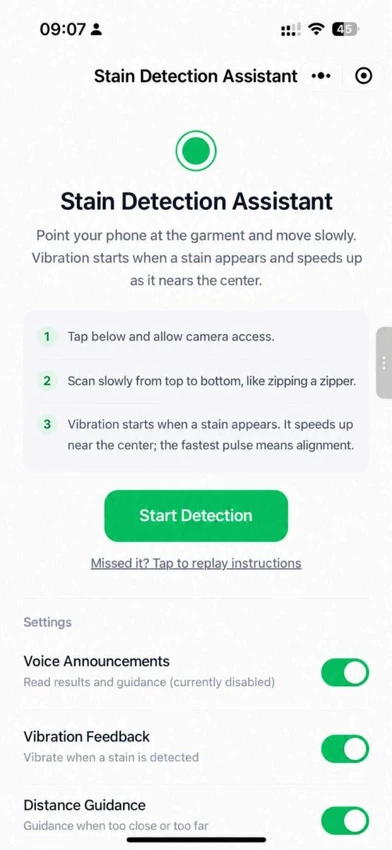
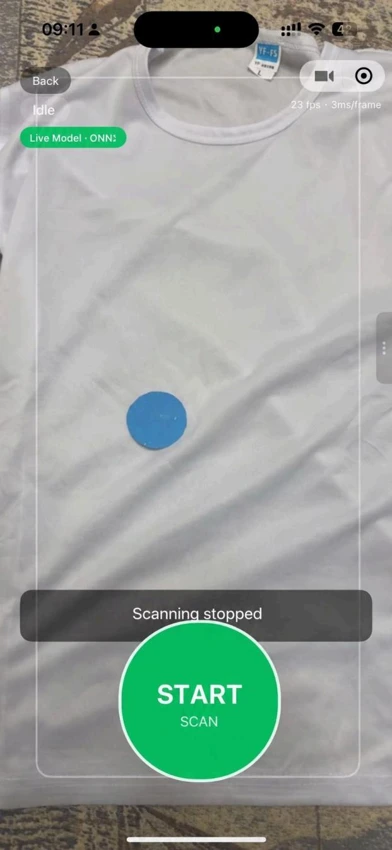
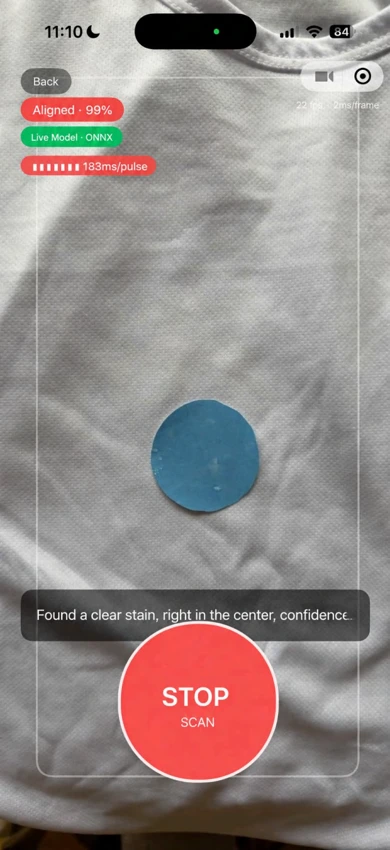
The proposed interaction test keeps lighting and camera distance consistent, moves the blue-dot target to different positions, and includes images without blue dots to check for false positives.
Project documentation
The full four-page project from my portfolio, including the original research, diagrams, development process, and iteration notes.
View all four project boards